
Looking to the Moon
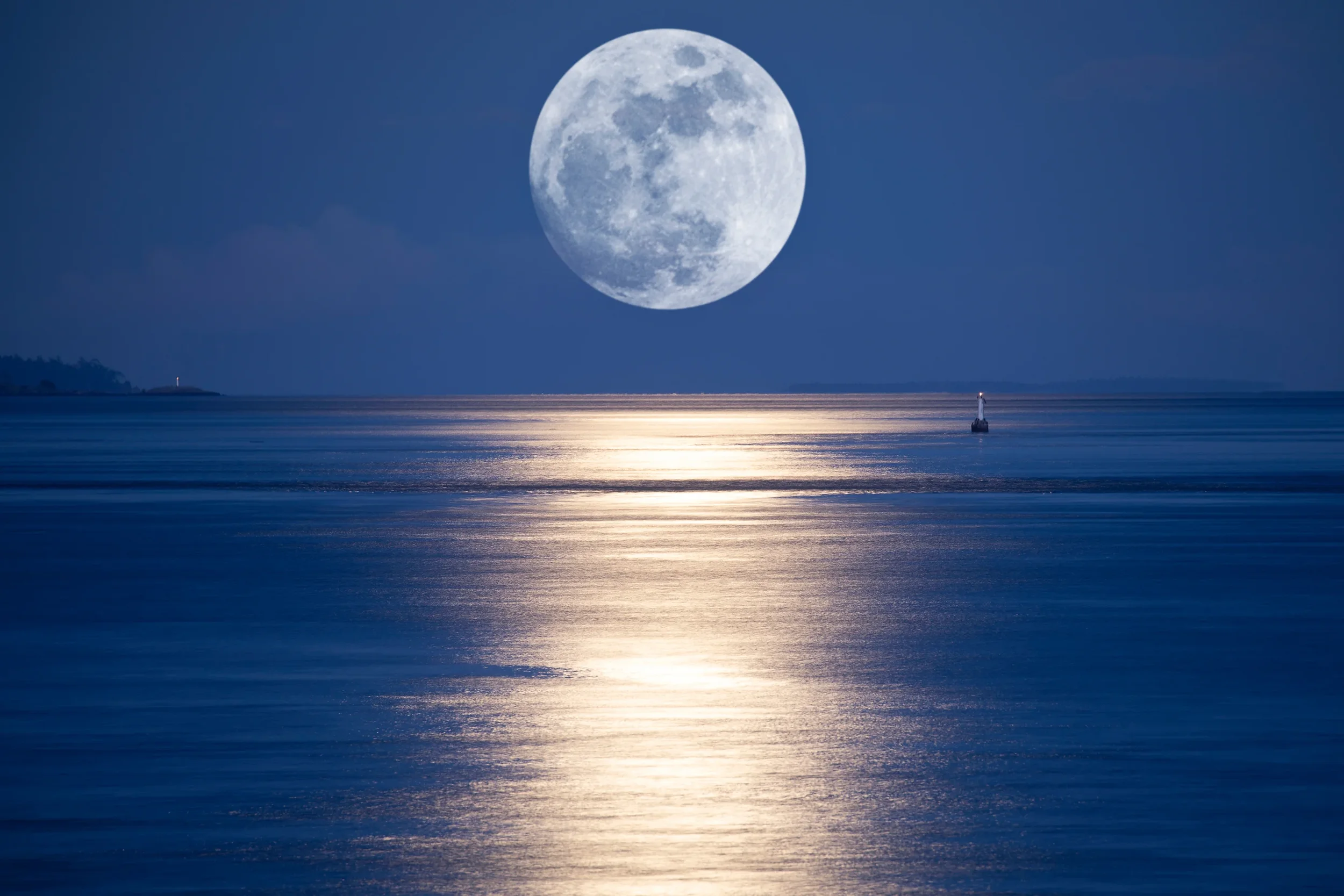
Image: Scientific American
The Moon is always a special target for astronomers and the phases leading up to the Full Moon and New Moon are best for exploring its surface. Our Moon and the planets in our solar system seem to travel along a path in the sky that we call the ecliptic. The north pole area of Luna has multiple craters that have been named after famous explorers of Earth. Some of the craters are Peary, Nansen, and Byrd-names you may easily recognize. Searching Luna can bring some exciting questions to mind that you just might want to further explore and research. With a steady telescope that has adapted to the humidity, it is a favorite way to search along the terminator where the division of shade and reflected sunlight merge and explore those craters and maria (mar-y-a; Latin for seas) of the lunar surface. The Moon is approaching First Quarter so it might be a good time to try your luck.
If you do, remember those bold brave Apollo astronauts, Buzz Aldrin, Michael Collins, and Neil Armstrong who made the first successful lunar landing. On July 20, 1969 Michael Collins had the dubious honor of manning the Apollo capsule while Neil and Buzz made the dangerous landing itself. Do realize the landing craft they used was so frail it could have been easily torn with a careless tool? We have to stand in awe of the people who imagined, dreamed, planned, constructed, and carried out the lunar missions. And all of the incredible achievements of manned space missions. A very thin skin protects our astronauts. I wonder if they even get hazardous duty pay? Were you even alive then to watch on grainy black and white television?
Venus is halfway from the horizon just after sunset. Early evening dust in the air gives our sister planet a slightly golden tinge. High overhead is Arcturus, beginning its westward slow decline into the horizon. Did you know the light from Arcturus was used to turn on the lights for the Century of Progress World’s Fair in Chicago in 1933? Light from the star was focused via telescope through a photocell which triggered the switches that turned on the lights and opened the grand event. This star was chosen because it was thought light from Arcturus took 40 years to reach Chicago in 1893. When the previous World Fair was held. Folks do love numbers; astronomy certainly has large enough numbers to make any math-centered person contented.
Arcturus, which is translated as the guardian of the bear, has had a name since at least five thousand years ago when the desert of Africa was a green fertile cattle-feeding field. Three-thousand years old rock paintings in the area depict cattle, sheep, and goats. The name Boötes is mentioned in Homer’s Odyssey. Other cultures saw the herder driving a bear-there is no figuring a connection of a bear herder – unless one enjoys the blending of the cultures of Greece and Saharan Africa artists. If only we had those same dark skies today; imagine what splendor we could see.
Walking outside last Sunday night I was gratified to see the overhead sky clear for a change. The Summer Triangle stars were blazing away, almost shouting out to say, "we're here." As we mentioned Cygnus in the last Weekender, here are the other two constellations that are part of the asterism, The leading star of the Summer Triangle is at the vertex of the triangle. It is Altair, the bright star of the Eagle, Aquila. The star behind it and above at the second vertice is Vega, pronounced VEE -guh according to ancient astronomers who were not from our part of the world; we 956ers would say Vayguh. Together they make a beautiful group of stars to watch wheel from the east, across the zenith in the south, and slowly sink into the western horizon by dawn, led by the diving swan.
The north part of the sky, which is more heavily light-polluted in my area, is sheltering Cepheus, the king of Ethiopia-a kingdom that encompassed parts of modern Israel, Jordan, and Egypt. The main stars forming him are not very bright and resemble an upside-down house during this time of the year-which puts him hanging upside down during the summer months. As a circumpolar constellation, he whirls like a counter-clockwise Ferris wheel throughout the 24 -hour period as he goes through day and night. His queen, Cassiopeia does the same thing. Look for her to be sitting on her throne which gives her the shape of a large letter W. Like all Greek myths, their story is tragic and involves treachery, vanity, jealousy, sacrifice and rescue of fair maidens, battles and warriors, gods and monsters-what’s not to like? You might enjoy reading about it as you sit in a shady spot with a glass of iced tea. I imagine there are books a-plenty at your local bookstore or library with tales of the constellations to share during a nighttime family star-gazing party. You could be the special treat as the story-teller.
Until next week, take a look at that moon-and wonder what courage it took and KLU.
