Mykel Del Angel | THE COSMIC CURRENT GRAPHICS
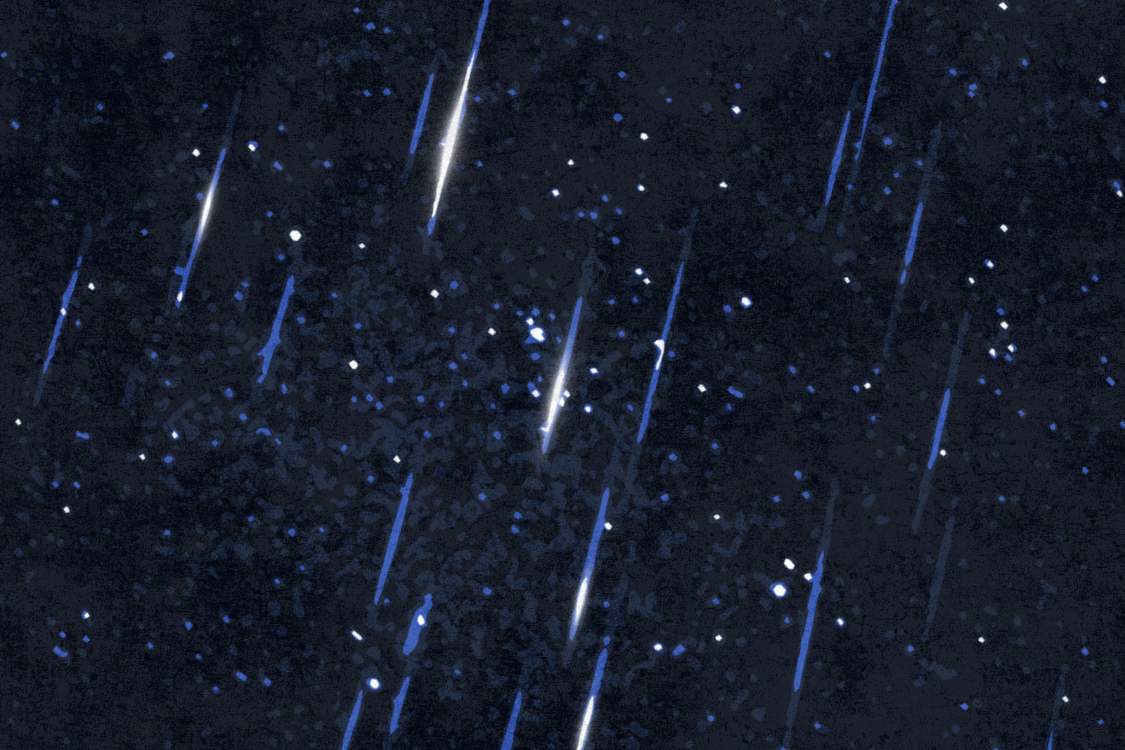
Throughout November, Earth passes through a stream of cosmic debris that produces one of the year's most intriguing meteor showers: the Leonids.
According to NASA, the Leonid meteor shower originates from dust and rock particles left behind by Comet 55P/Tempel-Tuttle, which orbits the sun approximately once every 33.3 years.
Over time, these particles spread along the comet's orbital path, creating a stream of cosmic debris that Earth passes through every November. When the particles enter Earth's atmosphere at extremely high speeds, they burn up, producing bright streaks of light known as meteors.
Why are they called the Leonids?
The Leonids get their name from the constellation Leo, where the meteors appear to originate from a single point in the sky.
This apparent point of origin, known as the radiant, is an optical illusion caused by perspective. In reality, the particles travel along nearly parallel paths through space.
When does this meteor shower occur?
According to the National Weather Service, the Leonid meteor shower is active throughout November, typically reaching its peak around Nov. 17.
During this year's peak, observers can expect to see approximately 15 to 20 meteors per hour under ideal viewing conditions. The Leonids are also among the fastest meteors, entering Earth's atmosphere at speeds of approximately 44 miles (71 kilometers) per second.
Historically, the Leonids have produced some of the most impressive meteor storms on record, with thousands of meteors appearing within a single hour.
The Planetary Society highlights the remarkable Leonid meteor storm of 1966, when observers witnessed an extraordinary burst of meteor activity.
Skywatching tips
According to NASA, the best time to observe this year's meteor shower is during the early morning hours of Nov. 17 and 18, after the moon has set.
As with most meteor showers, the Leonids are best observed with the naked eye. Meteors can appear unpredictably across the sky, so binoculars and telescopes are not recommended because they limit the observer's field of view.
For the best viewing experience, find a dark location away from city lights and allow your eyes to adjust to the darkness for at least 20 minutes.
Observers are also advised to avoid looking directly toward the radiant, as meteors can streak across large portions of the sky. Watching a wider area increases the chances of spotting longer, more visible meteor trails.
While catching a glimpse of a meteor may require patience, the experience is worth looking forward to as November gives way to December.
So, as November's night sky settles above you, take a moment to step away from the world below and look up for a chance to catch a little piece of the universe passing by.
After all, the Leonids are a fleeting reminder of the brilliance and celestial beauty of the cosmos.