
I spy with my eye… the Draconids Meteor Shower!
Marcelina Gutierrez | THE COSMIC CURRENT GRAPHICS
October 2026 features two meteor showers, beginning with the Draconids early in the month. The Draconids are typically a modest meteor shower, producing only a handful of meteors per hour during their peak. The shower is caused by debris left behind by Comet 21P/Giacobini-Zinner. As Earth passes through the comet's debris trail, particles enter the atmosphere and burn up, producing streaks of light across the night sky.
The meteor shower is active from Oct. 6-10, with its peak expected Oct. 8-9. Unlike many meteor showers, the Draconids are best viewed during the evening rather than after midnight. Observers can begin looking for meteors around 8 p.m., once the sky is sufficiently dark. With the new moon approaching Oct. 10, minimal moonlight is expected to interfere with viewing.
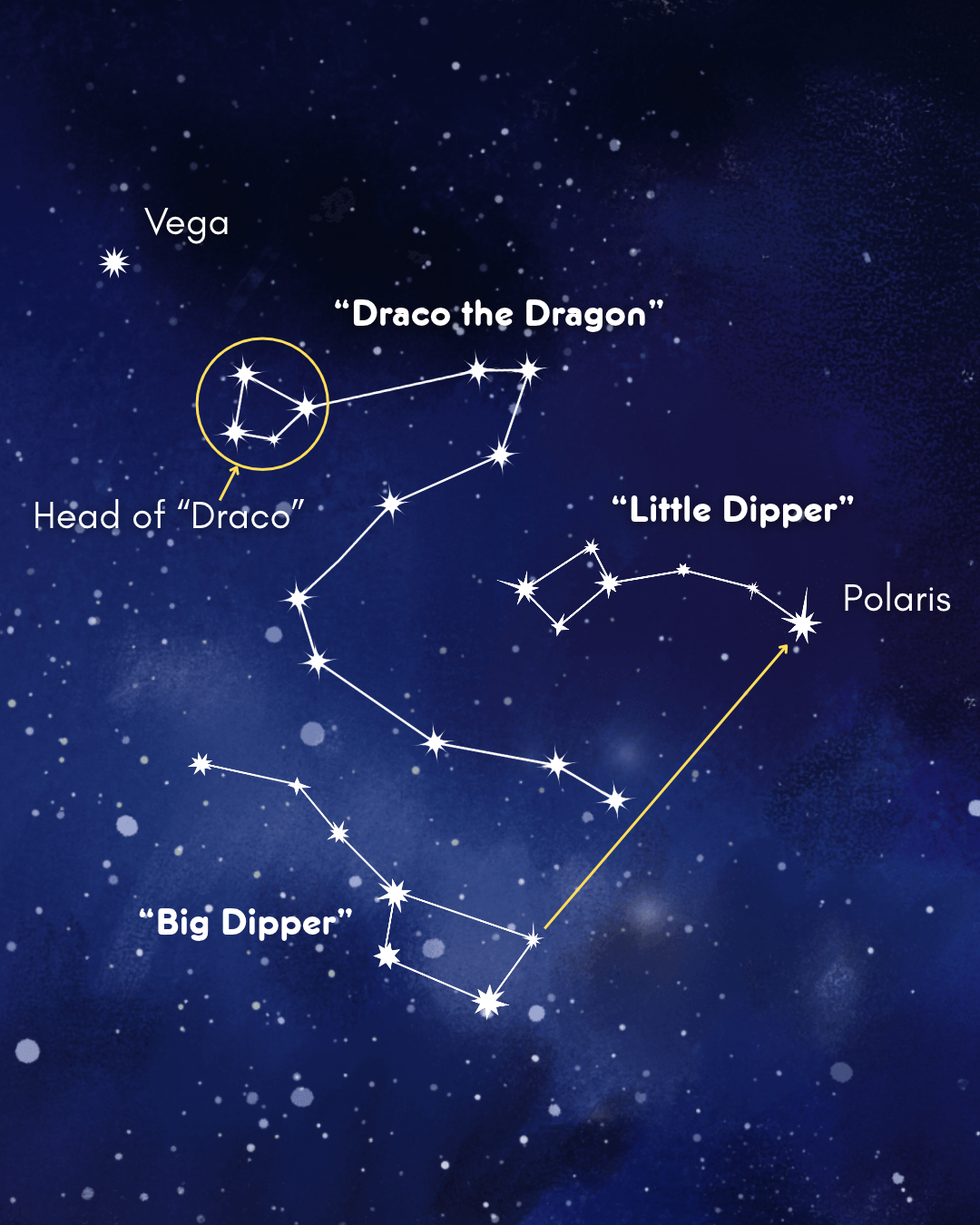
The meteors appear to originate from a point near the head of Draco the Dragon, a constellation in the northern sky. Draco can be located by looking between the Big and Little Dippers, with its head positioned in the general direction of the bright star Vega. However, observers do not need to locate Draco to enjoy the shower, as meteors can appear anywhere across the night sky.
For the best viewing experience, find a comfortable location away from city lights with an unobstructed view of the sky. Allow your eyes time to adjust to the darkness and be patient. With a little luck, you may catch a glimpse of comet debris burning through Earth's atmosphere.
Be sure to check the weather forecast for clouds, rain or temperature changes that could affect visibility and comfort.
For more astronomy and space-related content, follow The Cosmic Current on social media or visit our website.