
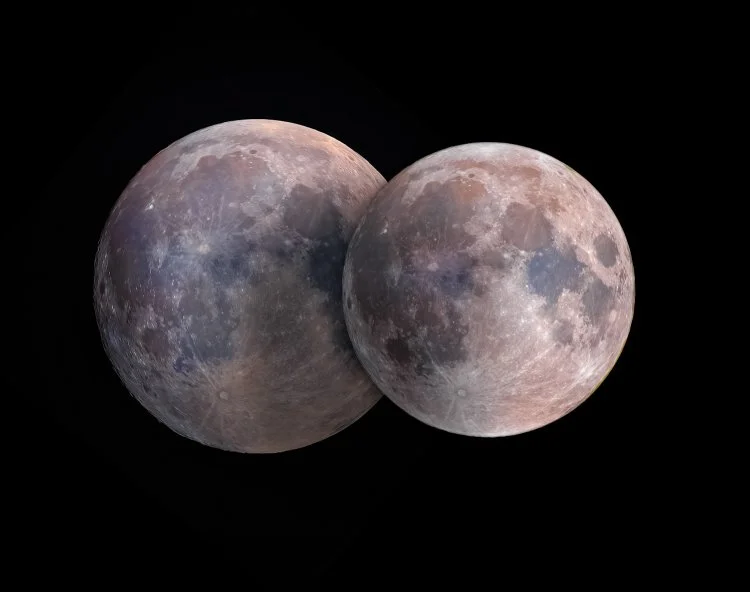
Comparison between a supermoon and a micromoon.
IMAGE COURTESY SOUMYADEEP MUKHERJEE
The Moon's orbit is elliptical, meaning its distance from Earth varies as it travels along its orbit. When a full moon occurs near its closest approach to Earth, we call it a supermoon. In reality, the Moon does not change in size. Its proximity to Earth makes it appear larger and brighter.
The Moon completes an orbit around Earth approximately every 27.3 days, while its cycle of phases lasts about 29.5 days. The farthest point in the Moon's orbit from Earth is called apogee, at an average distance of approximately 405,500 kilometers. The closest point is called perigee, at an average distance of approximately 363,300 kilometers.
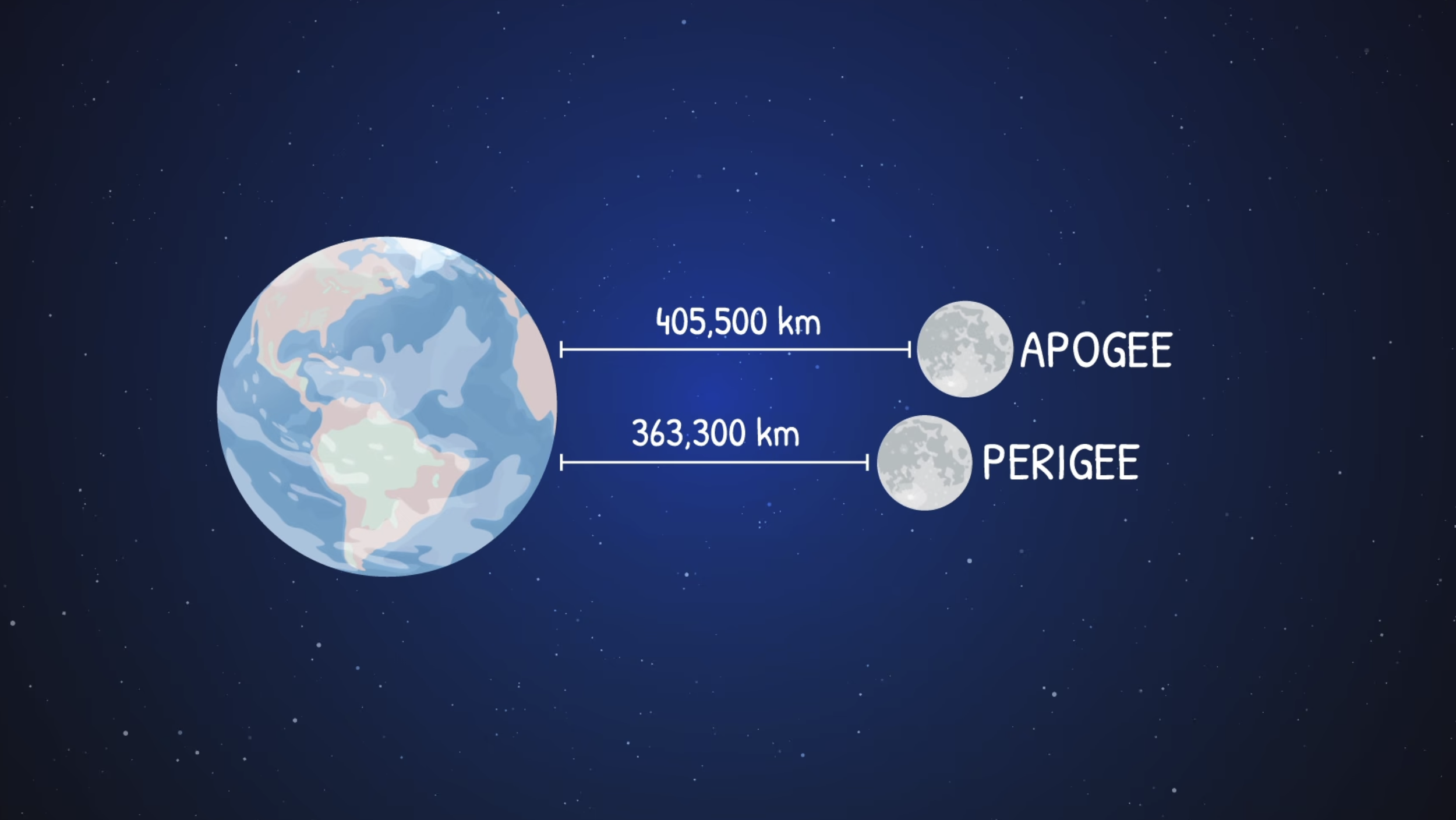
IMAGE COURTESY NASA/JPL
When a full moon occurs near perigee, it appears larger and brighter and is commonly known as a supermoon. Conversely, when a full moon occurs near apogee, it appears smaller and dimmer and is known as a micromoon.
A supermoon can appear up to 14% larger and 30% brighter than a micromoon.
Three consecutive supermoons will mark the end of 2026 and the beginning of 2027, offering skywatchers an opportunity to appreciate the full moon near its closest approach to Earth.
For more information about supermoons, visit NASA's website.
