
Observing the Universe
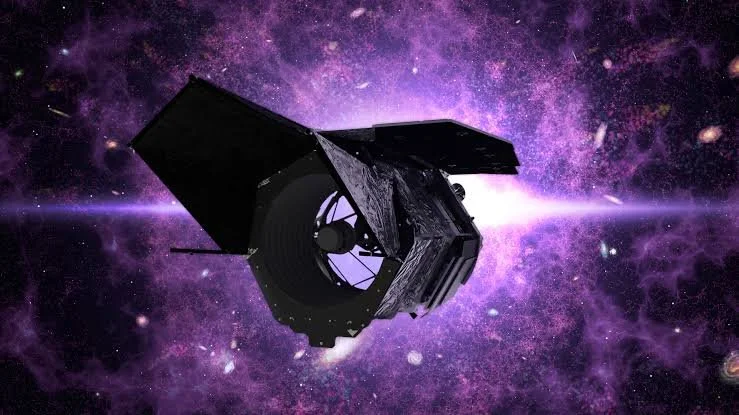
Image: Space.com
If you are already hearing the summer buzz “I’m b o r e d” than the following link just might be what is needed to silence that particular buzz: https://science.nasa.gov/citizen-science/. There are numerous sites from NASA and related entities on line for us to access.
The soon-to-be-launched Nancy Grace Roman Telescope team is inviting folks who would like to send their name out of this world to visit the website before July 12 and add their name to the chip at this site: https://t.co/mSLkvPLgVB. Millions of folks from around the globe have sent their name into space on multiple Mars missions, the various missions to asteroids, to intercept a comet, and on space-based telescopes. It is fun to know that part of us at least is far out. This telescope will study dark matter among other things we know little about. For more information you can visit https://science.nasa.gov/mission/roman-space-telescope/. There have been many women hard at work making discoveries and missions for NASA and her story can be found at https://science.nasa.gov/people/nancy-roman/.
I hope you were able to watch the changing distances between Venus and Jupiter these past few weeks. Emerging out of the dark western sky after dark the two, sometimes accompanied by faint Mercury very close to the horizon, have been passing in the night, with Venus eventually to become the morning star once again.
Last Friday night about a hundred folks braved mosquitoes and heat to visit Olmito’s Resaca de la Palma state park and World Birding Center, site of the Christina Torres Memorial Observatory, to check out the new telescope and engage in family-friendly activities related to space missions and creating lunar landers. There is so much energy in the young folks involved in voluntarily sharing their time to bring the WOW of space science to families. There were even visitors from Colorado that night, oohing and aaahh-ing over the moon, Venus, and occasionally a glimpse of Jupiter. The South Texas Astronomical Society can be accessed through its on-line site that publishes scholarly and family-friendly articles on a regular basis. Check them out at https://starsocietyrgv.org/. High school, college, young adults beginning their careers here, and folks like me are having fun sharing the wonders of what’s out there with folks like you.
As we have now begun our summer stretch the familiar constellations have been hidden by all the clouds over the past few weeks. They are out there though, clear or cloudy or light polluted sky. Pretend it is a treasure hunt and slather on the mosquito repellant and take a drive out to South Padre Island away from the ever-present light and there are lovely jewels in that sky. Starting with the bright blue-white star Regulus in the constellation Leo in the southwest, heading west to Venus in Gemini, the brightest point of light now unless the moon is visible. The brighter stars of Gemini are Castor and Pollux, the heads of the Twins.
Almost due south is the S of Scorpius, with its distinctive pair of stars at the tail, sometimes called the stinger stars. These two star, Shaula and Lesath are 5 light years from each other, even though they look close together, Scorpius has the Butterfly cluster, the Ptolemy cluster, the Cat’s Paw nebula, the Fried Egg Nebula…it is chock full of wonders to see. Check out this site, sign up to get regular emails related to astronomy topics for more. https://earthsky.org/brightest-stars/shaula-and-lesath-scorpions-stinger-stars/https://www.space.com/19931-hale-bopp.html
To the east from Leo is Virgo, with brilliant Spica, another blue-white star tucked in the crook of the Maiden’s left elbow. An engaging summer activity might be to create your own names for the various standard 88 constellations and write stories about what you dream up. That is exactly how we got the ones we have. Reading stories from other cultures is one way to enjoy star gazing.
There is a comet out there making its inward bound trip around the sun, Comet 10P/Tempel passing through Capricornus and then into Aquarius, arcing between M72, M73, and NGC 7009. A decent small telescope may give us a glimpse during the New Moon phase in July. Faint, but so much fun to spot a comet. Do any of you remember the summer of 1994 when the comet was pulled apart by Jupiter’s gravity? And being able to step out a front door, look north and watch Hale-Bopp in 1997 night after night? That takes some doing to top a view of a comet. https://www.space.com/19931-hale-bopp.html
Until next week, KLU- and use mosquito repellant. carolutsinger@att.net
