
Life on Mars?
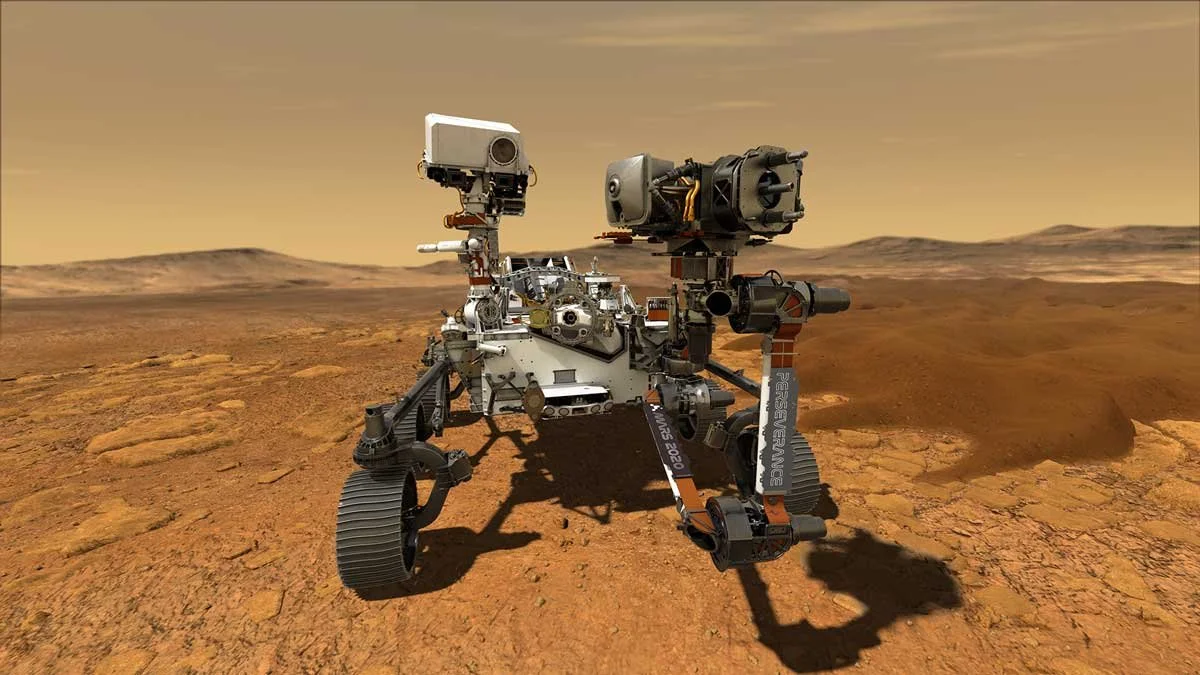
Image: NASA Jet Propulsion Library
Why do you suppose we keep seeking life on other planets, particularly on Mars? Sometimes I wonder “what if we are like Superman”; a remnant sent from there when our planet was doomed our search is so intense. Since the twin Viking satellites were sent to Mars fifty years ago our curiosity only seems to grow. We have sent numerous landers, rovers, and orbiters but none have answered the question. Science does take time and is a generational effort but we do like instantaneous results.
We see the striving in our own once sleepy region where space missions are dreamed of and giant rockets are being tested regularly. The skies that once were dark enough to see all the brighter stars in the constellations are continually being washed out by additional lighting. I understand there is a group in Harlingen attempting to obtain assistance with the Dark Skies Initiative. If you are a part of that, our local astronomy group would like to hear from you. http://www.starsocietyrgv.org is the website.
Mercedes is sponsoring a great opportunity for family fun, Earth X & Space Celebration in Mercedes on August 1. The STARS group supports this event and enjoys helping bring the night sky and rocketry to families at this annual event. The fun runs from 2 PM to 6 PM at 1202 N. Vermont Ave., Mercedes, TX.
If you have been checking the positions of Venus and Arcturus occasionally this month you have noticed Venus is lower and Arcturus is not exactly overhead now. The star Deneb at the tail of Cygnus is so faint, yet it is a monster star-a supergiant white star 1,500 light-years distant and shining as much as 200,000 times brighter than the Sun. (I would put an exclamation point there but newspapers don’t approve of them.) The other main stars of the Summer Triangle, Vega and Altair are almost neighbors at a mere 25 and 15 light-years away. They appear to be about the same size and brightness of Deneb because they are closer to us. In reality, they are “just’ hot white stars 50 and 10 times brighter than the Sun. They are unusual in that they spin so quickly they are actually an elliptical shape instead of a sphere.
Once the sky is dark, about an hour after sunset, you might look for the sickle and triangle that form Leo the Lion in the west. It is slowly making its way into the pre-dawn sky of winter. The brightest star in Leo is Regulus and mid-month Venus stood near that star. The Moon visits Leo often since it lies above the path of the ecliptic that the planets and the Moon and the Sun all track along throughout the year. The stars of Leo are connected to a lion’s figure. The star at the tip of the triangle marking Leo’s hindquarters and tail is Denebola which means the lion’s tail. The star at the top of the sickle is called Rasalas which means lion’s head in Arabic.
If your skies are dark, and you have access to a good telescope, you might be able to see the Big Dipper and the stars of its handle. From the bowl they are Alioth, Alcor and Mizar in the middle, and Alkaid at the end. This region has many Messier objects including M97 APOD: 2009 May 15 - M97: The Owl Nebula near the bowl, M51 APOD: 2026 January 14 – M51: The Whirlpool Galaxy near Alkaid to the left and M101 APOD: 2025 May 16 - Messier 101 on the opposite side of Alkaid. Of course, they really won’t have the same look through your telescope as they do in these NASA images, but the beauty and intricacies will be worth your time to explore. Being able to see Mizar beside Alcor used to be a test of a hunter’s eyesight.
Until next week, KLU.
