
The Dog Days of Summer
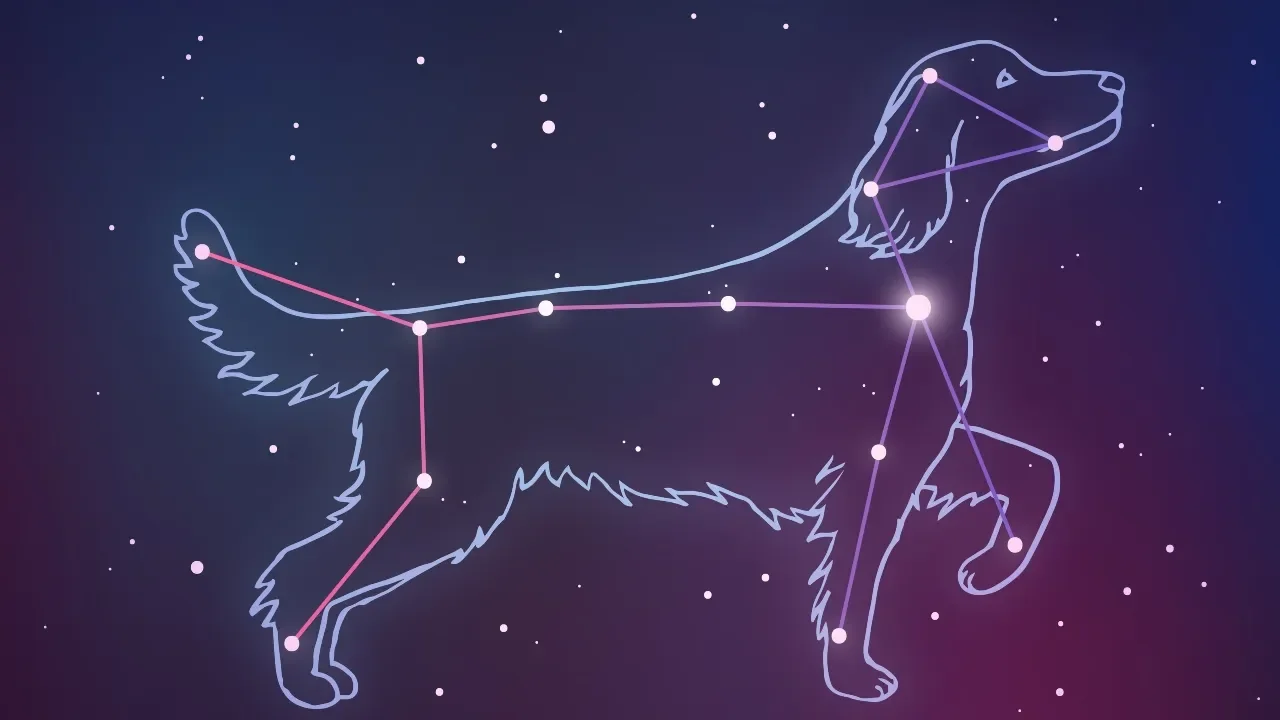
Image: WKBN
The Dog Days of summer are certainly calling attention to themselves. Although the term does not refer to living dogs panting in the heat of the day. Instead, it is the knowledge that the Dog Star, Sirius, is joining our star Sol shining throughout the daytime hours which was thought to be the reason the temperatures are unbearable unless there is a breeze when we stand in the shade of a friendly tree or spend time wandering in a nearby mall. The ancient civilizations in the Middle East definitely knew the patterns of the seasons and gave us wonderful stories and records of their knowledge of patterns in the skies.
While the light pollution issues increase almost daily and thousands of satellites are entering space on a weekly basis, recognizing and enjoying constellations is becoming more challenging. Venus is the lone planet visible in the night sky, sinking into the western horizon as it crosses the constellation Virgo throughout the month. Viewing it through a telescope will reveal it going through the regular phases that all spherical objects exhibit. Beginning the month about 50% of the surface reflecting sunlight to 40% by September. It is still the brightest point of light, even when it is near Spica, the brightest star in Virgo.
Perhaps you have been seeing notices in your media about the Perseid meteor shower; the peak is August 12th. The Moon will be New ensuring us that it will be more likely we will see a few Perseids when we are in a dark viewing location. The peak observing opportunity will be after 2:00 AM on the 12th and 13th. The streaks that meteors leave across the sky in the northeast will seem to emerge from Perseus, the hero who rescued Princess Andromeda. Perseus is just above the Pleiades and Taurus. By 4 A.M. Mars will be very low in the northeast just above Orion. Sky watchers are hoping for up to 100 meteors per hour.
Meteor showers are caused by debris left suspended in space by passing comets or asteroids. Imagine driving through a dust storm on the way to Port Isabel to be an analogy. Before the debris enters our atmosphere, it is a meteor. When Earth passes through the debris, those bits of rock or metal heat up the atmosphere, and are labeled a meteoroid. Once it hits Earth it is classified as a meteorite. The Perseids are known for persistent light tails to ohhh and ahhh over. I keep a rocky chondrite and a Campo del Cielo meteorite in my purse to share with folks I meet in public places. I also have a moldavite to compare to the meteorites. It’s a lot of fun to ask adults if their children would like to hold a meteorite. Only a few have not wanted to.
If you are an early riser, then you will be glad to know that Saturn will be visible after midnight with the planet sited just below the waning gibbous Moon on August 4 before sunrise of course
You heard about a solar eclipse? Sorry, only the north part of the hemisphere will be witnessing a partial eclipse, but we will be able to enjoy a lunar eclipse on August 27th. If your group will be sponsoring a watch party let me know and we will share the details in the next column.
The Summer Triangle is one of the best recognized traditional constellations. Vega is the brightest star in Lyra. According to mythology, the Lyre was invented by Hermes and given to his half-brother Apollo, who passed it on to his son, Orpheus. Shakespeare wrote “everything that heard him play, even the billows of the sea, hung their heads, and then lay by.” It was that skill that Orpheus used to charm Pluto and the denizens of the underworld that let Orpheus’ wife Eurydice to return to the living world. But, as in the Biblical story of Lot’s wife turned back, Orpheus looked back and he lost Eurydice to Pluto forever. The lyre was placed among the stars in complement to the exquisite night music of summer. The Greek tragedies gave us many good lessons on a secular level.
Until next week DO let some stars get in your eyes and KLU
Comments and suggestions welcome at carolutsinger@att.net
