Orionids Meteor Shower & Saturn Rising
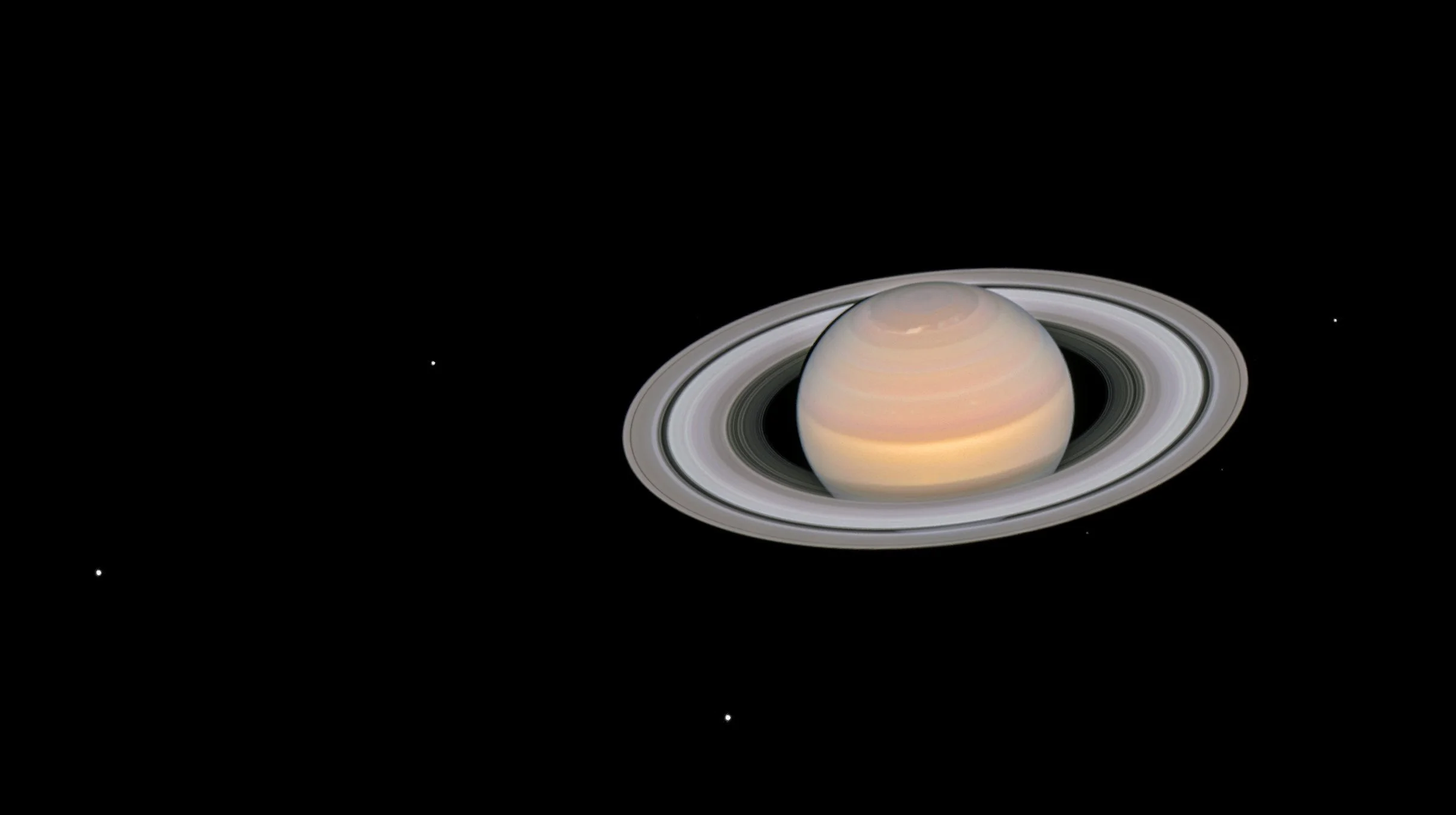
Image: Cosmic Pursuits
As usual when we are anticipating a celestial event it is cloudy or rainy so if you did see one of the predicted/anticipated Draconid meteors streaking through the sky, consider yourself fortunate. The peak of the Orionids will be the nights of October 20, 21 in the wee hours of the morning. Whenever we are outside after dark though, there is always the chance of a stray streak of a surprise meteor streaking on its own. I have seen a few just happening to look up at the split second one appears and there is such a WOW feeling when that happens. I hope you have had that surprise too.
As the earth rotates on its axis constantly, we do have the pleasure of having Saturn in our field of view all night long. Rising at the horizon in the east about 7:00 P. M. we can watch it cross the meridian about 1:00 A.M. and sink into the western horizon as the sun rises. Those folks driving the east/west thoroughfares of the RGV may spy its slightly ivory tint and wonder about the ‘guest star’ they see in just a slightly different location each evening.
I have observed the motions of Jupiter and Saturn during the night, as they were apparently getting closer and closer while they moved in their respective orbits. I am so grateful that many years ago Dr. Rey Ramirez was the science curriculum specialist for BISD who purchased the remarkable portable planetarium. It made a huge impact on me when my principal at the time, Henry Kenneson, sent me to the training-and 27 years later I am still able to share what I learned from their initiative. The taxpayers of our nation probably never got as much bang for their buck as I did from the NSF grant that paid for the Starlab in 1989. What has inspired you to look up? I would truly like to know. Perhaps we could share your reasons for looking up in a future column. I frequently meet former students who excitedly tell me what they remember is ’the big bubble’, meaning the Starlab-in fact one was at church today and she was giddy with excitement recalling the event.
Ruddy Mars and Jupiter are in the east by 3:00 A. M. Jupiter is the brightest point of light in the sky-you can’t miss it unless light pollution is an issue from your viewing site. From our perspective on Earth, they appear to be moving closer together each night. By October 31 they will be within six degrees of one another. Plan to rise before the crack of dawn to see these two planets; you will also have the pleasure of Orion high in the southwest-a sneak preview of the February evening sky. Orion’s three-starred wrestling champion of the Universe belt would give the current one a run for his belt for sure.
If you have access to a safe dark site, facing west you should be able to locate the Summer Triangle asterism near the zenith. The Northern Cross or Cygnus the Swan is within the part of the Milky Way astronomers call the Orion-Cygnus Arm. Our solar system is in this arm. We are such a small, insignificant-appearing system in the grand scheme of things. It is amazing to think about when we stop long enough to do that. And the newer space-based telescopes are revealing even more galaxies than were even speculated about. https://esawebb.org/images/potm2504a/ contains images from the near-infrared cameras on the Webb telescope should you care to take a look at what those cameras are revealing.
That arm of the Milky Way harbors Perseus in the north, as he is rushing to rescue Andromeda from Cetus the water monster bent on having her as a snack. Her mother Cassiopeia is circling helplessly above, held captive on her throne because of her vanity. There are some serious object lessons in the constellations.
While scanning the zenith along the Milky Way be sure to look for tiny Delphinus; it looks like a small dipper.
Until next week, KLU and if you want to share your how I started looking up anecdote, my email is <carolutsinger@att.net>