Image: NASA Science
Thanksgiving is close, and one of the things I am thankful for is that I eventually met Saturn through a telescope when I was in my forties and that changed my trajectory of teaching. If you have never seen that beauty through the lens of a GOOD telescope, you have no idea what you have been missing. The good news is that there is a functioning astronomical society in the lower 956 that offers opportunities for seeing Saturn and so much more. If you are curious, just use your favorite search engine and plug in South Texas Astronomical Society to learn more about the group and connect with good sources of real information and calendars of events.
It does seem as though we get clouds and rain whenever there is an opportunity to experience a meteor shower; this month has been no exception. The annual Leonid meteor shower peak was definitely a washout. There is consolation in that there will most likely be other opportunities to experience even a happening by meteorite in your lifetime if you keep an eye on the sky as you spend time in the outdoors. A single burst of color for a moment will never be forgotten. The best one I ever saw was on a normal night, before light pollution. It was a ruby-red streak surrounded by gold, about 45 degrees high in the north; I will see it in my mind’s eye as long as I live. What is a great astronomical event that stands out for you? Let us know via email carolutsinger@att.net.
One of my resources is the UT Austin magazine StarDate. The current issue contains an article about a young chef who lives on an island near the coast of France who invented a simple app for stargazing events. I don’t >know if there is a cost but I am including the information in case you are curious. <play.google.com/store/apps/details?id=com.colindavis.nakedeye> It alerts users to upcoming events from sunsets to the ISS passing overhead. If you have never seen the ISS crossing the sky above you, it is a treat to do so. Knowing there are people actually trusting themselves to math and an old spacecraft as they are 225 miles up traveling 17,500 mph should boggle your brain.
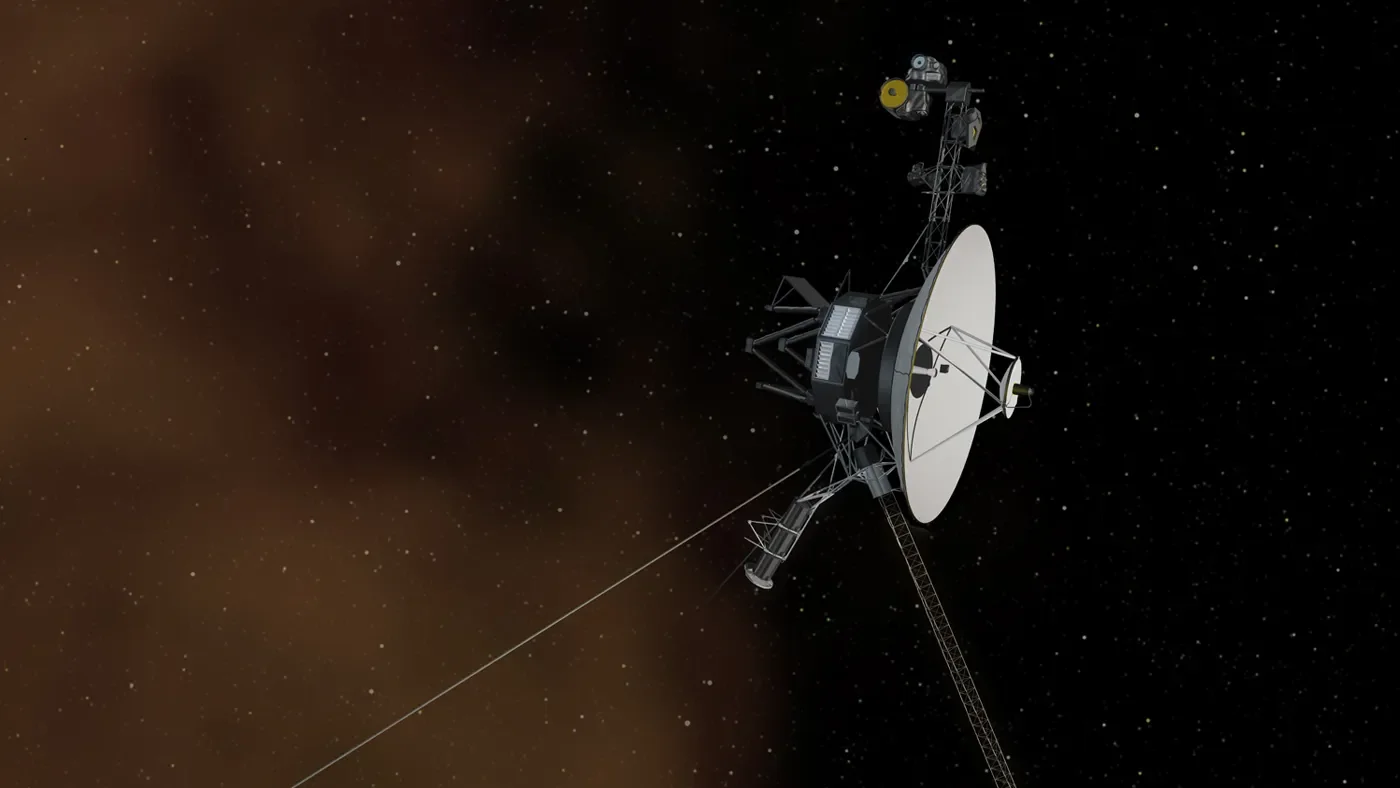
Launched on September 5, 1977, the American spacecraft Voyager I (‘Veeger’ in Star Trek) is one light-year day distant from Earth this week. How far is that? 16,094,799, 096 miles as of November 18-almost 34,000 round-trip voyages to the Moon from Earth. So, when your children ask “Are we there YET?” on the road to Thanksgiving visits, remind them of relative length of travel time.
I suspect some of you may be hearing a voice suggesting that for Christmas they could really use a telescope. Parents and spouses usually want to fill heart desires of those they love and take a chance purchasing the one available locally. WAIT and consult someone who actually uses good telescopes for advice before spending those hard-earned dollars. In inexpensive telescope will most likely be a disappointment to the giver and the receiver. Inadequate mounts and eyepieces lead to frustration and the back of the closet-or out in the next garage sale. Advice from an experienced user is a long 70-90 mm refractor or a 114mm or 6-inch reflector. A Dobsonian mount is a good starter bought from a reputable on-line source-and that is NOT Amazon or eBay. Astronomy companies will have better tech support and customer service. Get in touch with the STARS because they will be able to give good advice.
The same dependable constellations and planets will be visible this week as last week so I think we will end on a “KLU” and “ask a STAR for advice on a telescope for a loved one”. Looking forward to seeing you next week, Carol