Investing in the stars
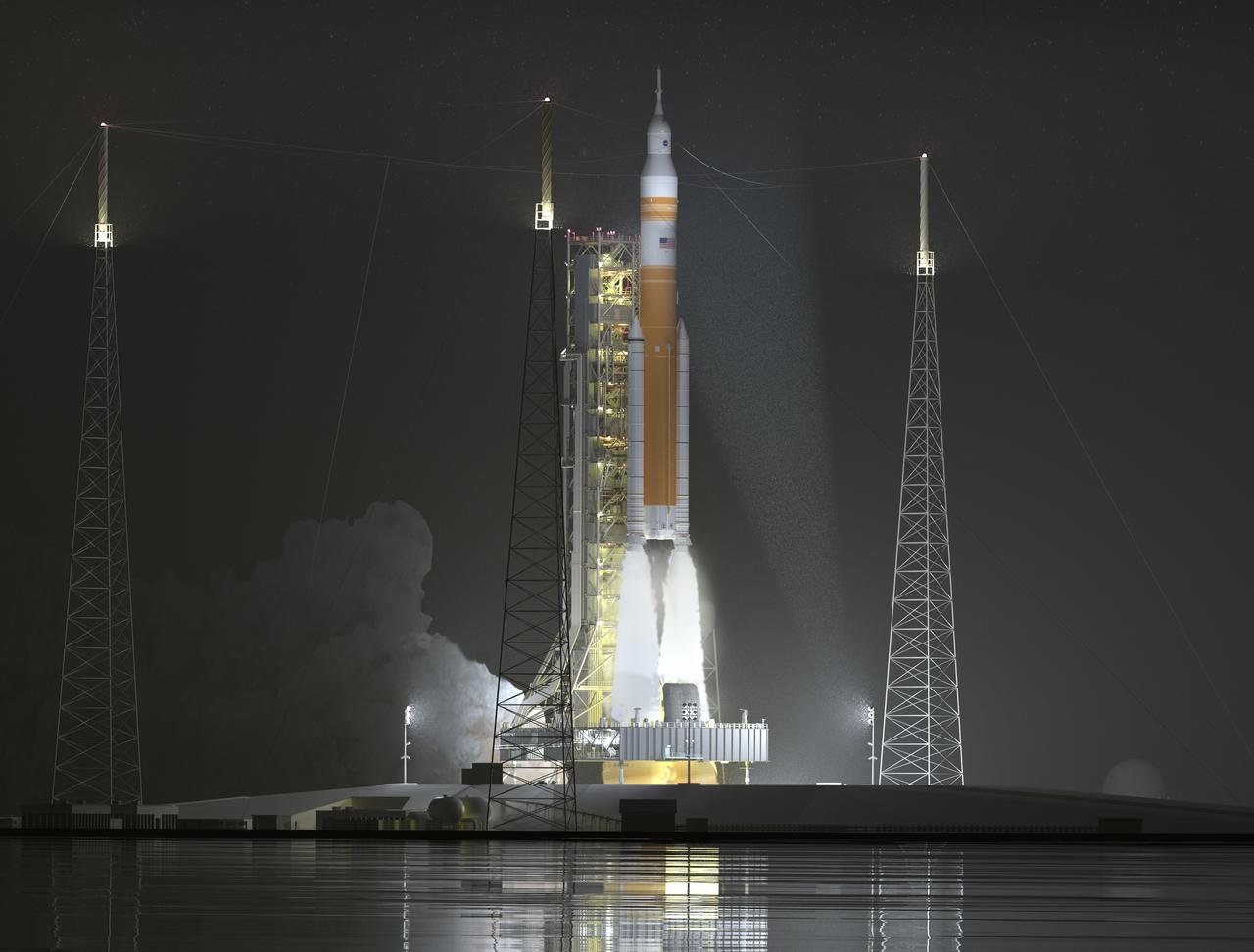
An illustration shows NASA’s SLS Block 1B Crew rocket launching with the Orion spacecraft on a mission to the Moon.
IMAGE COURTESY TERRY WHITE/SLS
Brownsville, home to SpaceX's Starbase in Boca Chica, has become increasingly intertwined with the commercial aerospace industry; some might even call this growing city a launchpad for STEM education.
The Rio Grande Valley has found itself closer to the cosmos than ever before, with rockets rising from the South Texas coastline and a new wave of interest in aerospace and STEM fields. However, for some residents of Brownsville, the arrival of a major space facility has also brought concerns about development and environmental impacts that such rapid growth could have, namely the disruption of wildlife through light pollution.
While these concerns deserve consideration, the significance of the aerospace industry extends beyond the launchpad. Decades of investment in space exploration have produced some of the most significant technological advancements society has ever known.
Satellite technology, GPS, weather monitoring and advancements in communications, medicine and environmental science have all benefited from investments in space exploration and the curiosity which drives it.
NASA’s satellites, for example, have provided deeper insight into natural disasters and the environmental impacts. What was once developed to solve problems beyond Earth’s atmosphere has repeatedly found its way into everyday lives.
For students in the Rio Grande Valley, the growing aerospace industry offers an opportunity to engage in an environment that promotes innovation. Students can gain exposure to potential career and technological pursuits, serving as a pathway for students to gain technical skills and experience. Rather than watching rockets launch from our coast, future generations of valley students will have the opportunities to help design and improve the technology behind them.
So what happens if we don't invest in STEM programs? As the Rio Grande Valley gains opportunities to participate in humanity’s journey beyond Earth, it’s important to invest in the students who may one day guide future expeditions and shape the future of STEM. Continued investment helps develop a capable workforce here in the Valley, as well as supports surrounding businesses and local services like construction and manufacturing companies.
As the STEM industry continues to grow in the Rio Grande Valley, balancing investment in space programs with environmental preservation may depend on preparing local students through STEM education and equipping them to use innovative technologies to develop more sustainable practices.
After all, technologies developed through space exploration have also helped address challenges here on Earth. Space exploration may begin millions of miles away, but its impact is felt right here, at home.