
So you want to buy a telescope?
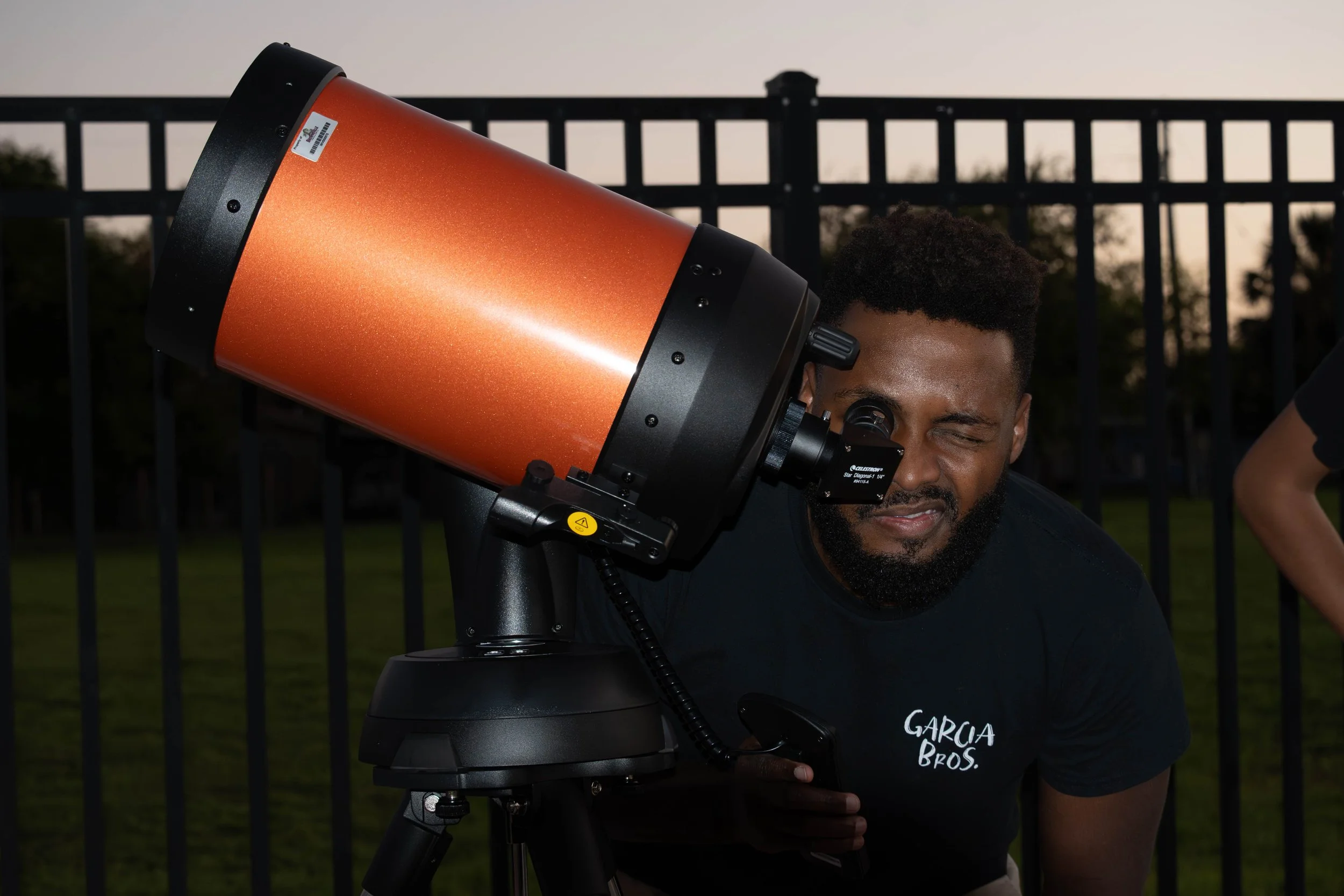
Phil Donaus, a STARS board member, observes the night sky through a telescope during a STARS skywatching event in Brownsville, Texas.
STARS FILE PHOTO
Purchasing a new telescope is exciting because it gives anyone interested in the night sky an opportunity to explore the universe from their own backyard. However, with so many options available, choosing the right telescope can quickly become overwhelming.
So, how does someone choose the best telescope? Here are the basic concepts every first-time buyer should know.
Before embracing this hobby, there is something people need to understand: A telescope is not a toy. Telescopes are optical instruments that collect and focus light. Never, under any circumstance, should anybody point a telescope directly at the sun without a certified solar filter or proper observing knowledge. Permanent eye damage and blindness have occurred when telescopes were used improperly. Never leave children unattended, and always follow the operating instructions provided in your telescope's manual.
Once the mandatory safety briefing is out of the way, it's time for the fun part: picking a telescope.
Every telescope consists of two basic components: the optical tube assembly (OTA) and a mount. The OTA is what most people simply refer to as the telescope. One of its most important characteristics is aperture, which determines how much light the telescope can collect. The larger the aperture, the more light the telescope gathers, producing brighter images and allowing finer details to be resolved.
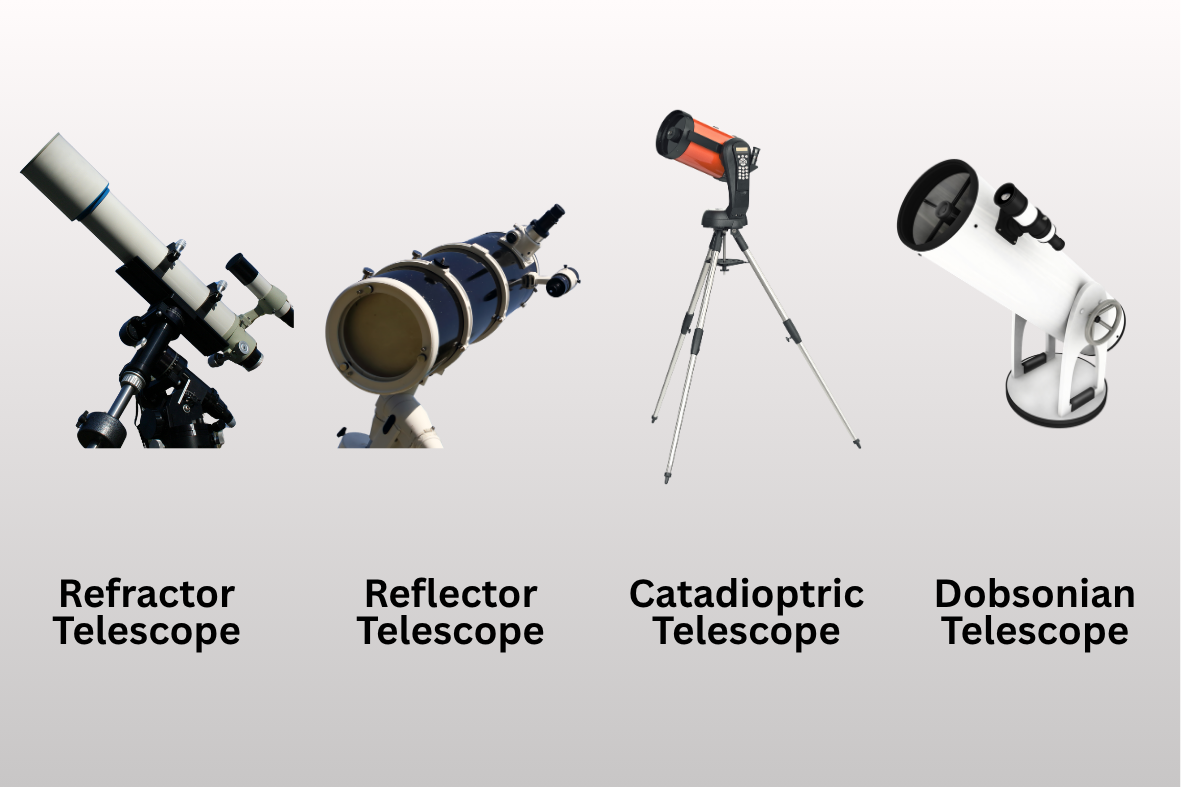
Telescopes come in several designs, each with its own advantages and disadvantages.
Refractor telescope: This is the traditional telescope design, using only fixed glass lenses. Refractors are excellent for observing the moon and planets but generally have a narrower field of view.
MYKEL DEL ANGEL|THE COSMIC CURRENT GRAPHICS using Getty Images
Reflector telescope: This telescope uses curved mirrors to concentrate light. Because mirrors are less expensive to manufacture than large lenses, reflectors offer the greatest light-gathering capability per dollar. They also provide a wider field of view but require occasional mirror alignment.
Dobsonian telescope: A Dobsonian is a subtype of reflector telescope mounted on a simple box-style base. While it is bulkier and more difficult to transport, it provides excellent value for visual observing. Its lower height can also make using a finderscope slightly more challenging.
Catadioptric telescope: This design combines lenses and mirrors to maximize optical performance. It is popular among intermediate and advanced users and is commonly used for astrophotography. Keep in mind that there are several types of catadioptric telescopes.
First-time buyers should consider three main factors: performance, affordability and ease of use. Catadioptric telescopes are generally not recommended for beginners because of their higher cost, while Dobsonian telescopes can be more difficult to transport. Refractors have narrower fields of view and, at comparable apertures, are typically more expensive than reflectors. Reflectors have their own challenges, but learning to align the mirrors is a simple procedure that usually takes only a few minutes.
Another important consideration is the tripod and mount. The tripod supports the telescope and should be sturdy enough to prevent unwanted movement, while the mount allows the telescope to point toward objects in the sky.
There are two basic types of mounts.
Altazimuth mount: This is the simplest type of mount to operate. It moves vertically (altitude) and horizontally (azimuth). However, because celestial objects move across the sky, both axes must be adjusted continuously to keep an object centered in the eyepiece.
Equatorial mount: This type of mount is designed to compensate for Earth's rotation. Once properly aligned, it can track celestial objects using only one axis of movement. The initial setup involves adjusting the mount's latitude angle and aligning it toward true north.
Although equatorial mounts may appear more complicated at first, the ease of tracking objects across the sky often outweighs the extra setup time. The latitude adjustment is typically a one-time setup unless observing from a different location, and polar alignment becomes a quick process with practice.
Motorized equatorial mounts are also available. Known as Go-To mounts, these systems automatically locate and track celestial objects after the user selects them. Go-To mounts are commonly used for astrophotography and long-exposure imaging because they provide highly accurate tracking. However, they are generally more expensive than manual mounts, require external power and are often paired with computers for even greater precision.
The final consideration is the eyepiece. The eyepiece is the final optical component of a telescope, focusing the collected light for the observer. Eyepieces are measured in millimeters, and the general rule is simple: the larger the number, the lower the magnification.
The two most common eyepiece sizes are 25 mm and 10 mm. A 25 mm eyepiece provides a wider field of view, making it easier to locate objects. Once an object is centered, switching to a 10 mm eyepiece increases magnification for closer observation.
A Barlow lens is another useful optical accessory that fits between the telescope and the eyepiece to increase magnification. For example, a 2× Barlow lens allows a 25 mm eyepiece to perform like a 12.5 mm eyepiece, effectively doubling the available magnification without requiring additional eyepieces.
Selecting a telescope ultimately depends on personal budget and observing goals. As experience and knowledge grow, many observers begin looking for additional capabilities and eventually outgrow the limitations of their current telescope, leading them to purchase larger or more advanced equipment.
If you're still unsure which telescope to purchase, publications such as Wirecutter, Space.com and Telescopic Watch publish regularly updated buying guides that compare beginner models across different budgets. Understanding the concepts covered in this guide will make those recommendations easier to evaluate and help you choose a telescope that best fits your needs.
