
Summer’s Best Light Show
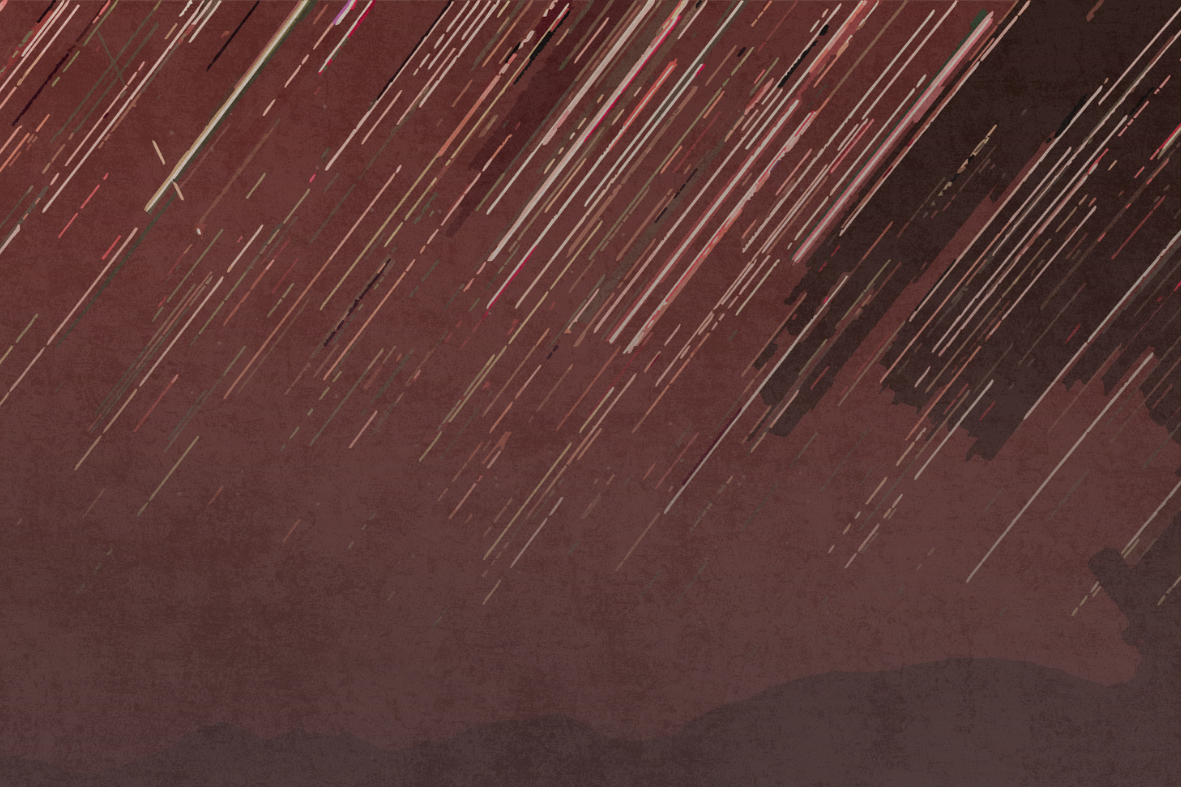
Mykel Del Angel|THE COSMIC CURRENT GRAPHICS
When the sun sets on Aug. 12, skywatchers will enjoy a front-row seat to a spectacular natural fireworks display in nature: the peak of the Perseid meteor shower.
According to the American Meteor Society (AMS), the peak of the Perseids occurs on Aug. 12 and 13, and the shower will be visible from July 17 through Aug. 24, 2026. Meteor activity will increase slowly each night until the peak in mid-August, then gradually fade.
This year's shower is expected to offer excellent viewing conditions. A new moon occurs when the moon is positioned between Earth and sun, leaving its illuminated side facing away from Earth. As a result, the midnight sky will be especially dark, creating an ideal backdrop for meteor watching.
To understand what is happening overhead, it helps to look at the trail of debris left behind in space. Meteor showers occur when Earth moves through debris left behind by comets, icy bodies that orbit the sun.
According to the AMS, as Earth passes through this trail of dust and small rocks at speeds of more than 130,000 mph, the particles slam into the atmosphere. The intense heat generated by their rapid passage through the atmosphere vaporizes the debris, creating bright streaks of light commonly known as shooting stars.
While there are several meteor showers each year, the Perseids are widely considered a favorite among backyard astronomers. The meteors appear to radiate from the constellation Perseus and are produced by debris from Comet Swift-Tuttle.
The Perseids are special due to their high activity rate and intense brightness. At its peak observers can spot up to 100 meteors per hour under dark skies. Research by Marco Fulle and colleagues found that Comet Swift-Tuttle leaves behind larger fragments of debris capable of producing brilliant fireballs. These exceptionally bright meteors can blaze across the sky, leaving glowing, colorful trails to linger for several seconds.
Catching this show doesn't require special equipment. In fact, binoculars and telescopes are not recommended since they narrow your field of view, making it easier to miss meteors streaking across the sky.
For local viewers, city light pollution is a main obstacle. Those who stay in town will probably only catch brighter fireballs. Escaping the bright lights can provide a much better show, with weather permitting. A short drive to Boca Chica Beach or South Padre Island north of the last public beach access can offer darker skies. Open rural areas across the Rio Grande Valley may also reveal dozens of fainter meteors which make up the bulk of the shower.
Tips: Heading outside after midnight is recommended since the sky is darker, and the constellation Perseus has climbed higher above the horizon. Bring a reclining lawn chair or blanket to comfortably watch the sky without straining your neck. Once you are set, turn off flashlights and smartphones and allow your eyes to adjust to the darkness, which may take 20 to 30 minutes. With a little patience and clear weather, nature's annual light show should provide an unforgettable performance.
