
The Cosmic Current
About the Team
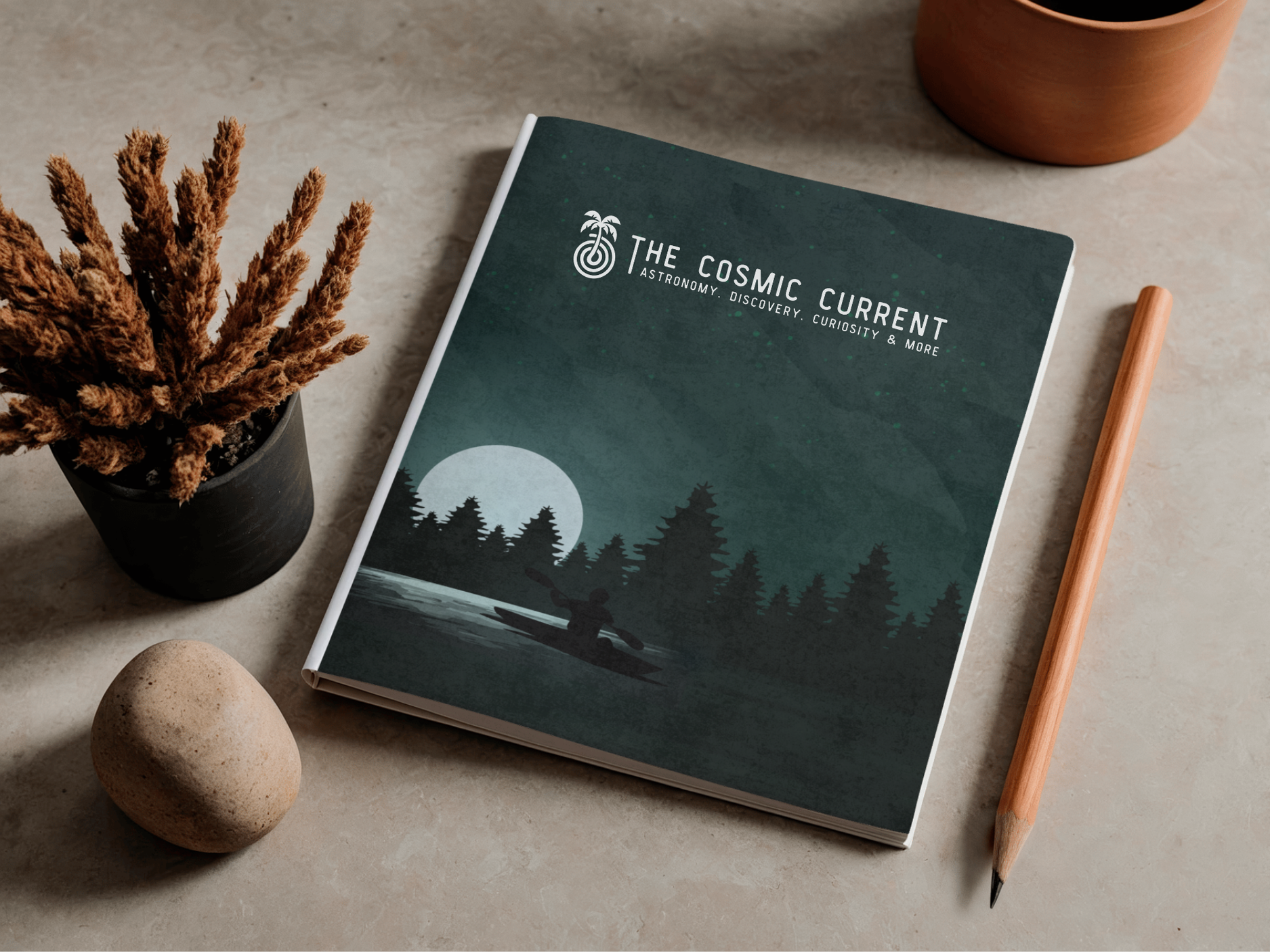
The Cosmic Current is a specialized publication operated under the STARS Media & Communications Team. While it functions as an independent project with its own volunteer writers, editors and contributors, it remains part of the Media & Communications Team and follows STARS branding, communications and organizational standards.
The mission of the Cosmic Current is to make astronomy and space science accessible, engaging and relevant to communities across South Texas through accurate, compelling and educational journalism.
Whether you're writing your first story or your fiftieth, this resource page is designed to help you navigate our editorial process and maintain the high standards of The Cosmic Current.
WRITING Resources
AP Style
Our primary style guide for grammar, punctuation, capitalization and formatting.
Resource: Purdue Owl - AP Style
Resource: Using AP Style
Cutlines
Best practices for writing informative and accurate photo cutlines.
Resource: Writing Cutlines
Resource: Caption/Cutline Writing
SVO Writing
Guidelines for writing in Subject-Verb-Object format to improve clarity and readability.
Resource: Subject-Verb-Object sentences
Resource: Learn the basics of SVO writing
News Writing
How to structure straight news stories using the inverted pyramid and other journalistic techniques.
Resource: News Writing Fundamentals
Resource: News Writing Basics
Science Communication Resources
Resources for explaining scientific topics.
Resource: New to Science Writing
Feature Writing
Guidelines for longer-form storytelling, profiles and explanatory articles.
Resource: What is a Feature Article?
Resource: Fascinating Features
Resource: Tips from Nieman Narrative
Editorial Policies
-
The Cosmic Current exists to make space, astronomy and aerospace accessible, accurate and engaging while providing a platform for scientists, educators, writers, artists and community members to share their work.
The publication prioritizes:
Education over advocacy
Accuracy over opinion
Curiosity over controversy
While The Cosmic Current includes reporting, educational features, opinion pieces, creative work and personal columns, it does not take institutional positions. Our goal is to inform, inspire curiosity and encourage thoughtful exploration of the universe.
-
Editorial Workflow
Every story follows the same general workflow:
Story pitch or assignment
Research and reporting
First draft
Editorial review
Revisions
Final approval
Publication
Social media promotion
-
Ethics & Standards
Our journalism is guided by the principles of accuracy, fairness, transparency and scientific integrity.
Writers should:
Verify information before publication.
Attribute information to reliable sources.
Clearly distinguish facts from opinions.
Avoid sensationalism and misleading headlines.
Correct mistakes promptly when identified.
Respect interview subjects and community members.
-
All factual claims should be verifiable and supported by credible sources whenever applicable. Writers are encouraged to rely on primary sources whenever possible and carefully fact-check information before submission.
-
Stories should be understandable to a general audience, including readers with little scientific background. Technical concepts should be explained clearly without sacrificing scientific accuracy.
-
Accuracy is our highest priority. If an error is identified after publication, it will be reviewed by the editorial team and corrected or updated transparently when necessary.
-
Stories are edited using the Associated Press Stylebook (AP Style) to maintain consistency in grammar, punctuation, capitalization and formatting while preserving each contributor's individual voice whenever possible.
SECTION GUIDELINES
-
Purpose
The Space News section provides timely, factual reporting on developments in astronomy, space exploration, aerospace and the commercial space industry. Its goal is to keep readers informed through accurate, balanced and accessible journalism.
Expectations
Stories should rely on credible sources, including official press releases, government agencies, scientific organizations, universities, research institutions, interviews, peer-reviewed research and properly attributed reporting from reputable news organizations.
Whenever possible, writers should seek primary sources or conduct original interviews.
Standards
Space News stories should:
Maintain a neutral and objective tone.
Clearly attribute information to reliable sources.
Avoid presenting speculation as fact.
Be thoroughly fact-checked before publication.
Follow AP Style.
Prioritize accuracy over speed.
-
Purpose
The Skywatching section helps readers observe and understand the night sky through practical guides, observing tips and explanations of upcoming celestial events.
Expectations
Stories should use reliable astronomical data from sources such as observatories, planetariums, government agencies, scientific organizations and reputable astronomy publications.
Writers should verify dates, times, visibility and observing conditions before publication.
Standards
Skywatching stories should:
Use clear, beginner-friendly language.
Provide practical observing information.
Describe celestial events accurately.
Avoid exaggerated claims about visibility or rarity.
Be fact-checked before publication.
-
Purpose
The Discovery section explains astronomy, aerospace and space science in a way that is understandable and engaging for readers of all experience levels.
Expectations
Stories may include science explainers, research summaries, space history, educational features and articles about how scientific concepts or technologies work.
Writers should explain technical ideas clearly and provide additional context or resources when useful.
Standards
Discovery stories should:
Avoid unnecessary jargon.
Define scientific terms.
Use examples to clarify complex ideas.
Rely on credible scientific sources.
Preserve accuracy while remaining accessible.
-
Purpose
The Arts & Culture section explores how people experience and express their connection to space through creativity, entertainment, history and community.
Expectations
Content may include art, astrophotography, music, literature, film, television, video games, creative writing, artist profiles and space-inspired cultural events.
All work should have a clear connection to astronomy, aerospace, science, exploration or humanity’s relationship with the cosmos.
Standards
Arts & Culture stories should:
Use an engaging and thoughtful tone.
Clearly connect the subject to space or science.
Respect contributors’ ownership of original work.
Properly credit creative works and outside sources.
Remain appropriate for a general audience.
-
Purpose
The Perspective section provides space for informed commentary, personal reflection and thoughtful discussion of space-related topics.
Expectations
Articles may address ethics, policy, education, industry trends, scientific issues, science communication or the future of exploration.
Writers should support their viewpoints with factual information, credible evidence or relevant personal experience.
Standards
Perspective stories should:
Clearly distinguish opinion from fact.
Avoid misinformation and unsupported speculation.
Maintain a respectful and professional tone.
Use accurate, non-inflammatory headlines.
Be clearly labeled as opinion.
Disclaimer
Opinions expressed are those of the individual authors and do not necessarily reflect the views of The Cosmic Current, the South Texas Astronomical Society or its partners.
IMAGE & MEDIA POLICY
Every story should include at least one image from an approved source or an original STARS graphic.
Preferred Sources
STARS File Photos
Always check our Google Drive before searching elsewhere. Previous events and original photography should be used whenever appropriate.
Pexels
Free stock photography and video.
Request a Graphic
If suitable imagery is unavailable, request an original graphic from the Media & Communications Team.
NASA Image and Video Library
Public-domain imagery from NASA missions and research.
Image Credits
Always include an appropriate credit.
Examples:
Mykel Del Angel|THE COSMIC CURRENT PHOTOS
IMAGE COURTESY NASA
Marcelina Gutierrez|THE COSMIC CURRENT GRAPHICS
Do not use images from Google Images, social media, blogs or news websites without permission.
Email Policy
Use the official Cosmic Current (cosmic.current@starsocietyrgv.org) email whenever communicating with sources on behalf of The Cosmic Current.
Please ask mykel@starsocietyrgv.org for access.
Maintain a professional tone and respond promptly to interview requests and correspondence.
When conducting interviews:
Introduce yourself and the publication.
Explain why you're reaching out.
Be respectful of deadlines.
Thank sources for their time.
Submission Guidelines
Every submission should include:
400–600 words unless otherwise assigned.
A clear headline.
An author byline.
At least one approved image or an in-house graphic.
Proper image credits.
Reliable sources and accurate information.
A Google Docs link or Microsoft Word (.docx) file.
Stories should be submitted after proofreading and completing the submission checklist below.
Story Submission
Please submit drafts for editorial review to:
Mykel Del Angel
Managing Editor
📧 mykel@starsocietyrgv.org
Marcelina Gutierrez
Associate Editor
📧 marcelina@starsocietyrgv.org
If you have questions about an assignment, need help finding sources or would like feedback before submitting, don't hesitate to reach out. We're happy to help throughout the writing process.