
Darker Skies & Starry Nights
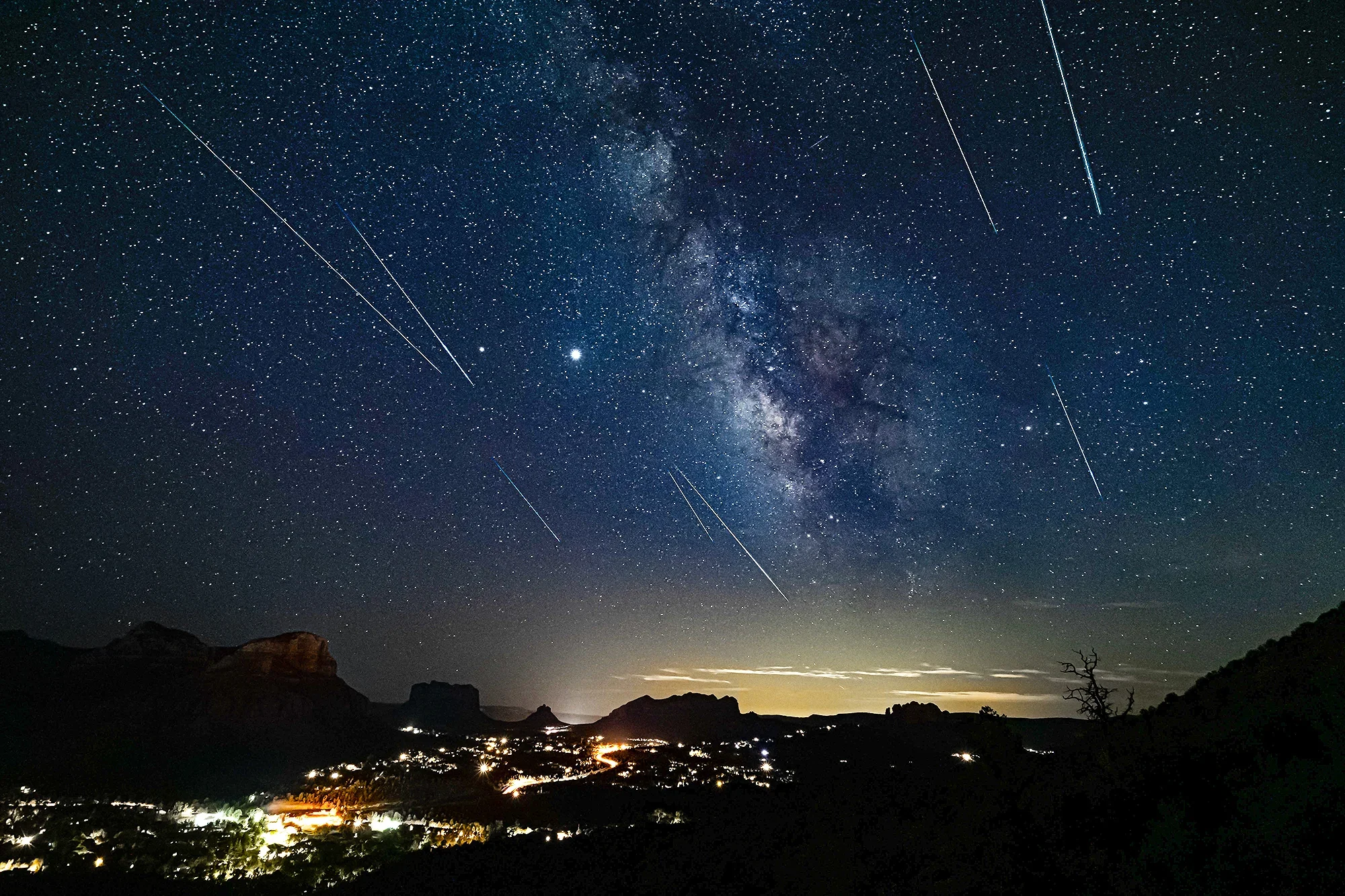
Image: Parks & Open Space
Have you ever had the amazing privilege of sitting under truly dark skies? Those of us of a certain age remember when we could step outside, look up above the trees, and see a few dozen stars gleaming out of the dark. And when the timing was right, we watched the conjunctions of Jupiter and Saturn, or Venus and Mars, which are so bright even street lighting couldn’t eliminate them. Even if we didn’t know their names, we knew that the view was different somehow.
We are so overly-lit now even the bats are having a difficult time; and forget about moths-the night sky is never really dark; this is a great loss in my opinion. However, the folks at Resaca De La Palma State Park and World Birding Center are hoping to make things a little better and have purchased a portable planetarium in hopes of providing some synthetic dark skies as it once was before all the population growth in our area. When the programs are ready to begin, I will certainly be alerting you. Some of you may have experienced the excitement of a planetarium during your elementary days. All the students that I encounter as I am out and about say the thing they remember best about school is being in “the big bubble” which really makes me happy because that is what I enjoyed sharing the most as their teacher. But one remembers when I told them to turn off the water while they brushed their teeth. (We seem to always be short of water.)
August Dog Days are definitely creating panting puppies and sweating people, and we are longing for the breezes. The reason is not that the Dog star (Sirius) is in the day-time sky-but that it is doggone hot. The longer hours of sunshine and the collection of heat on the surface of our home planet does make a difference. We are actually farther from the Sun during the summer months.
The only positive angle is that there are no mosquitoes when we try star-gazing. I hope you were able to see some of the meteors streaking across the sky this past week. There may be a few strays to surprise us yet; the official date for the activity continues through August 24. Once you have seen a meteor shower you will want to experience another one-they truly are beautiful. And what a week it has been for those avid observers-a New Moon, a solar eclipse, and the Perseids meteor shower, all in the same twenty-four-hour period. We can still look forward to a partial lunar eclipse on August 27. Peaking just before midnight, and continuing until the early morning hours, lunar eclipses are not hazardous to your eyes and can be a delight to observe, even without a telescope. The slightly reddish hue the Moon takes on is because it moves into the shadow the Earth casts when it is between the Sun and the rest of space.
We have not lost Venus in the evening sky yet, but it sets within two hours after the Sun sets. Look for the blue-white star in Virgo, Spica, to the left of Venus. Denebola, the tuft of the tail of Leo the lion will be to the right side of Venus. The constellations will be easier to see during the Lunar eclipse later in the month.
By 11:00 PM the Great Square of Pegasus is rising and moving closer to the zenith as Earth rotates as usual from west to east throughout the night. This “window” faces out toward the Milky Way. If you have a dark safe site for observing you may see what you think is the Little Dipper asterism but since you would be facing east, you would be actually seeing a delicate little constellation named Delphinus, the dolphin.
If you look higher, then the Summer Triangle stars, Vega, Deneb, and Altair will be visible. I enjoy this group of constellations because they are easy to identify and they have great myths behind them. Cygnus has been called a sword, the cross, and of course, a swan. What do you see?
Until next week, do let some stars get in your eyes and KLU. And if you have any comments or questions related to the column my email is carolutsinger@att.net
