
The Arrival of Autumn
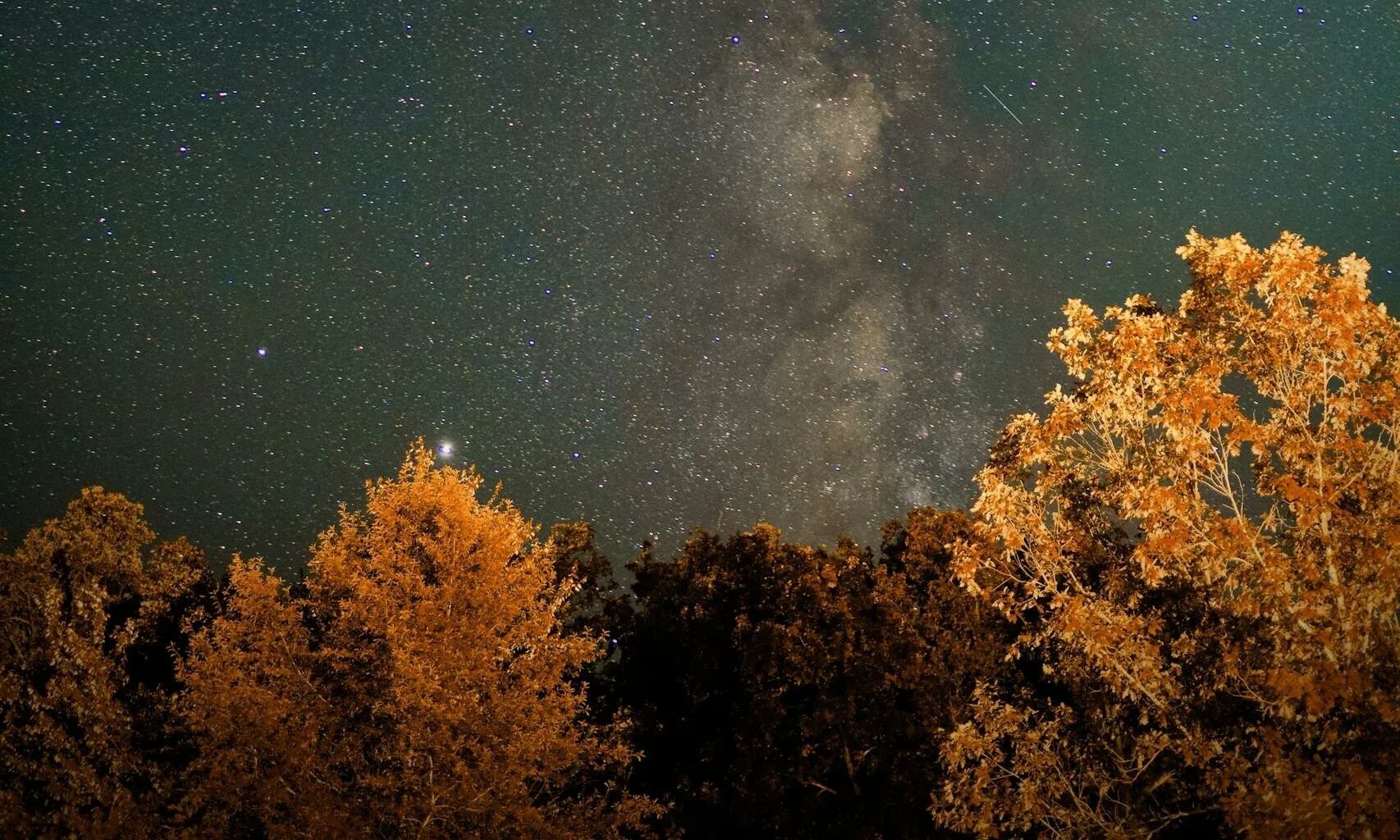
Image: Amateur Observers’ Society
I wonder if the fact that autumn officially astronomically arrives on Tuesday morning impresses you. Wouldn’t it be great to wake up to cooler weather? One can dream. The calendar marks seasons by months, but astronomers mark them by the date and time the sun rises at the vertex of the equator on Earth and the celestial equator from north to south. Although the equators are invisible, they have specific coordinates. The celestial equator is the orbital path of the Sun, Moon, and all the planets of our solar system.
The Northern Hemisphere has autumn and the Southern Hemisphere begins spring. On the first day, nearly every place on Earth experiences roughly equal hours of daylight and darkness. We have probably forgotten that time is an arbitrary measure developed by skywatchers who noted and recorded the motions of the stars even before there was a written language and we still are doing that today, but with greater accuracy than the sundial decorating gardens.
The ancient pyramid of Egyptian Pharoah Khufu caused the Great Pyramid at Gizeh to be built as his burial monument. It was built with an opening shaft on the north side that appears to be at the correct angle to point to the star Thuban. And Thuban was the north star six thousand plus years ago. Thuban is in the constellation Draco and earth’s pole was near that star about 2800 B.C.
If you wonder why the north star now is not the one today, blame it on earth’s precession on a 26,000 years long circular cycle, like the playground top those of us of a certain age remember from recess. The celestial pole will make its closest approach to Polaris in 2102 A.D.
There was great work done by those ancient cultures and the more we look into the past marvels, using many tools developed for the space program to ‘see’ them under tons of sand and water and thick jungle growth, we learn amazing information. Using many of those space-mission tools archeo-astronomers have been discovering many wonderful structures across the globe that reflect a deep understanding of the astronomy of ancient cultures long gone.
Late at night look for Capella ising in the northeast late, a bright winter night star in the constellation Auriga, the Charioteer. Capella is a yellow star and is known as the momma goat. Auriga is carrying goat kids under his arm and Nanny around his neck. Here in the 956, he would be driving his huge four-wheel drive truck to a Pachanga. But to the Greeks and Romans it was a different story.
Leaning far back or reclining in a lawn lounge you will be able to see Deneb, the majestic swan that will be almost straight above you. Cygnus, the host to Deneb, represents a young man who gave his life attempting to rescue a drowning friend. The three constellations, the eagle, the swan, and the lyre each have good stories behind them.
The bright stars in the summer triangle asterism are like gems in the midnight velvet and Deneb marks the celestial swan’s tail. Perhaps you will notice a flock of birds wending their way south. The honking of geese or babble of the tree ducks always add a note of enchantment when star gazing.
Until next time, DO let some stars get in your eyes and KLU. carolutsinger@att.net
