Growth is changing the Rio Grande Valley's night sky
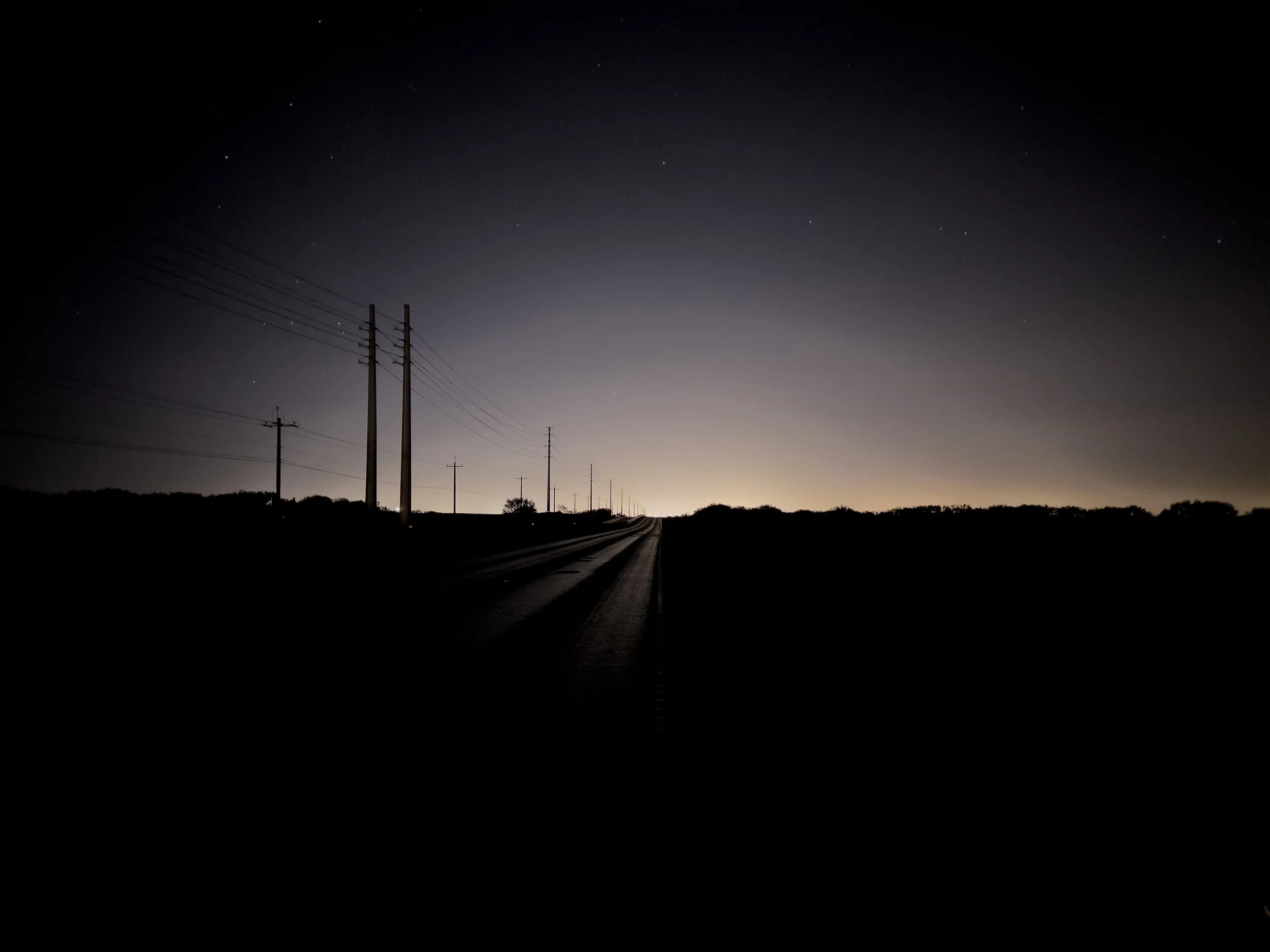
Brownsville’s light dome glows along the horizon as seen from a darker area between Brownsville and Port Isabel.
Mykel Del Angel | THE COSMIC CURRENT
Years of development and population growth across the Rio Grande Valley have brought more artificial light to the region, affecting views of the night sky and raising concerns about its effects on wildlife.
Much of the Rio Grande Valley’s urban areas are mapped as Bortle Class 8 to 9 skies, according to Light Pollution Map. The Bortle scale classifies night-sky brightness from Class 1, representing the darkest skies, to Class 9, representing heavily light-polluted urban skies.
Jennifer Rektorik, a DarkSky Texas board member and Rio Grande Valley outreach coordinator, said she has watched the Valley’s night sky change over time.
Rektorik recalled spending summers at a ranch in Starr County, where she said the skies “were so dark and the stars were so beautiful.” As development spread, she began noticing more lights appearing along the horizon.
“All of a sudden we would see one light on the horizon,” Rektorik said. “And soon there were more lights on the horizon. And the more lights out there, the less we’re able to see the stars.”
But Rektorik said the effects of artificial light extend beyond the ability to see stars.
“Darkness is habitat,” Rektorik said. “So when we disrupt that habitat, we’re disrupting the ecosystem.”
Light pollution affects wildlife across the Valley, including at Resaca de la Palma State Park in Brownsville.
Samantha Stillman, superintendent of the park, said artificial light can disrupt migratory patterns and alter when animals feed and breed.
“It can affect anything from migratory bird patterns, the way that they see and they fly,” Stillman said. “It can affect feeding times, breeding times, and that’s pretty much for every species that we have.”
Stillman said reptiles and amphibians can also be affected by brighter nighttime conditions, which may make them less likely to emerge at night.
Although Resaca de la Palma provides relatively dark conditions within Brownsville, Stillman said light from surrounding development still reaches the park.
“The pollution that we’re still getting from the surrounding cities and the surrounding area, from houses, residences to the high school being so close to us, it really shows that we’re still having a negative impact,” Stillman said.
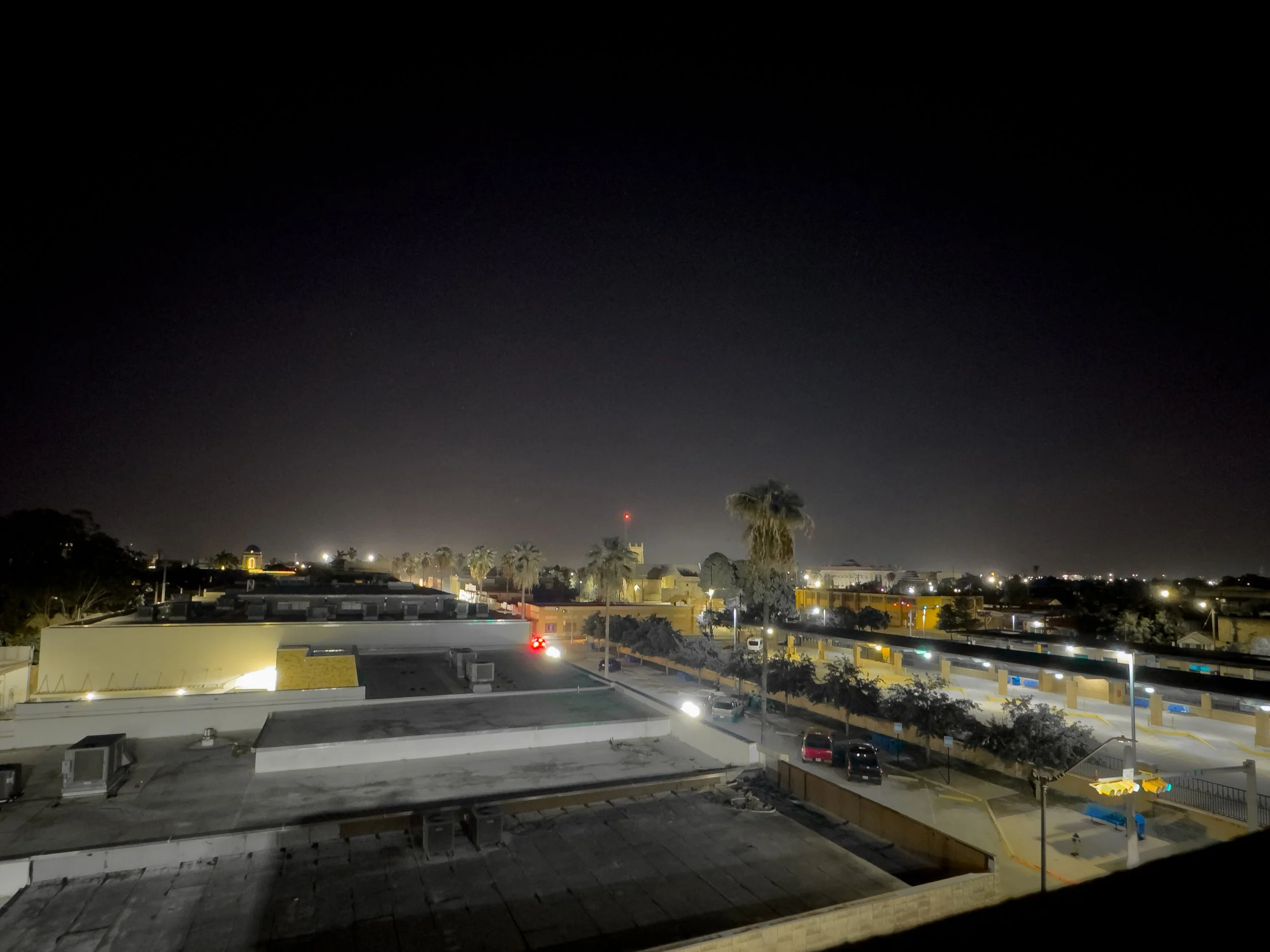
Artificial light brightens the night sky over downtown Brownsville.
Mykel Del Angel | THE COSMIC CURRENT
Light pollution has also affected astronomical research in Brownsville.
According to a 2020 master's thesis by UTRGV physics graduate Richard Camuccio, CTMO, formerly known as Nompuewenu Observatory, was relocated from the UTRGV Brownsville campus to Resaca de la Palma State Park because of light pollution from downtown Brownsville and the university.
The observatory remains at Resaca de la Palma, where it is operated by UTRGV.
As communities across the Valley continue to grow, Harlingen is taking steps to reduce the effects of artificial light.
The city has begun working toward an International Dark Sky Community designation. Daniel Lopez, city commissioner for District 2, said the city has passed a resolution supporting the initiative and is now developing an ordinance that would establish lighting standards.
“We have to start making decisions today that are going to have impacts for the next 100, 200, 300 years,” Lopez said.
Lopez said the city is already considering dark-sky standards when replacing lights in city buildings, parks and trails. He said the effort could also benefit Harlingen's wildlife and nature tourism.
“Darker skies means more birds, more birds means more birders,” Lopez said. “It helps every aspect of our economy, and why shouldn’t we be doing that?”
As development continues across the region, Lopez said he hopes Harlingen's efforts can contribute to a broader shift in how Valley cities grow.
“The Valley’s going to grow. We’re going to have more builders, we’re going to have more houses, but how do we maintain our beauty?” Lopez said.