A silent boom
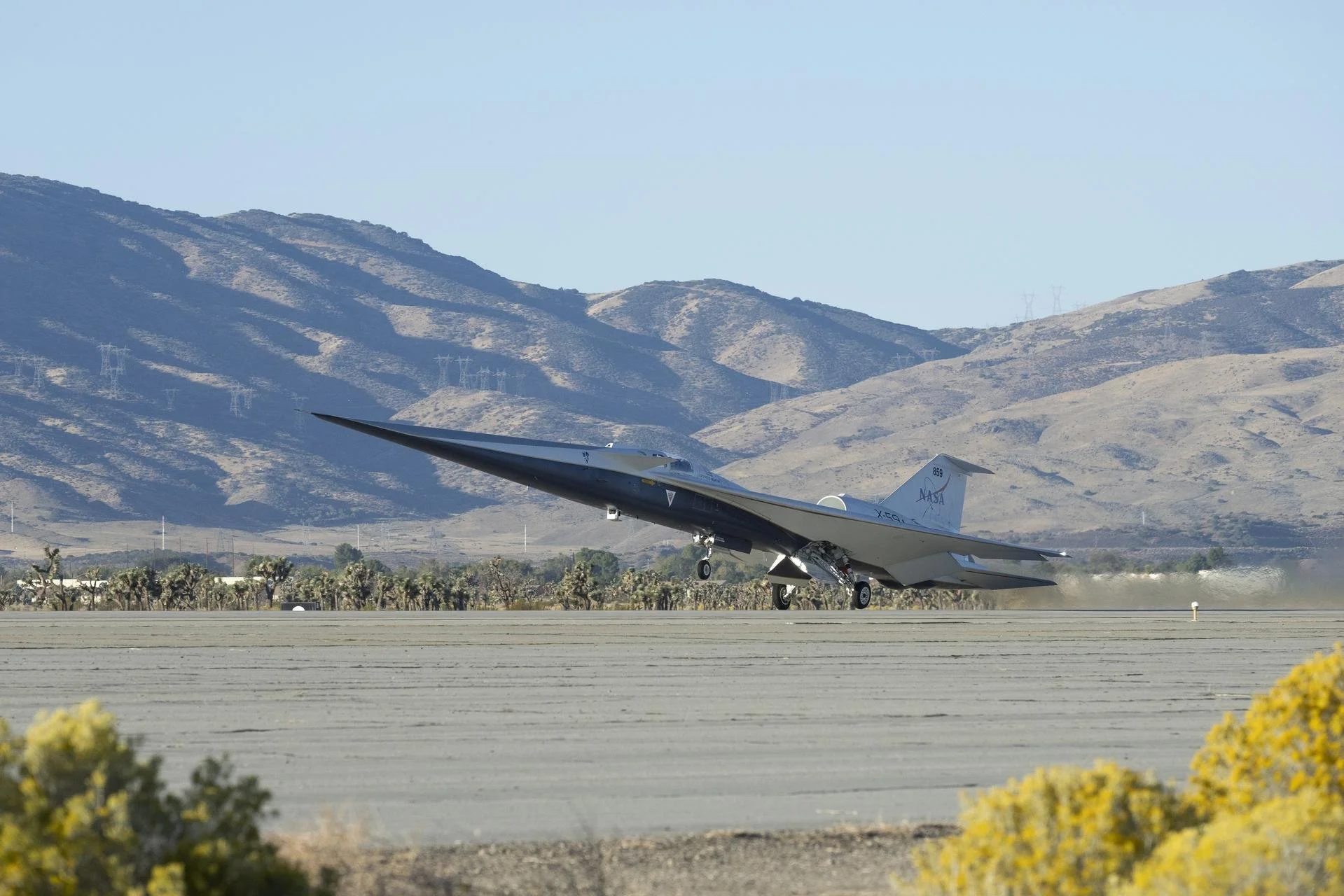
COURTESY PHOTO NASA/CARLA THOMAS
The X-59, an experimental supersonic research aircraft built by Lockheed Martin for NASA’s Quiet SuperSonic Technology (QueSST) mission, aims to prove that supersonic travel without a loud sonic boom, a large pressure wave created when exceeding the speed of sound, is possible.
In theory, the aircraft turns window-shattering pressure waves into a quick series of smaller sonic thumps no louder than a car door slamming.
There are several engineering choices that directly contribute to this sound mitigation, the most significant being the shape of the plane itself.
Its extremely long nose (nearly 40 feet) and swept-back wings help distribute pressure waves more evenly across the body of the aircraft rather than concentrating them at the front and rear, which leads to a larger sonic boom. Aside from this, the cockpit has no forward view, using only a camera as part of the eXternal Vision System (XVS). Combined with the aircraft’s overall shape, this helps pressure changes across the plane occur gradually instead of all at once.
The X-59 first flew Oct. 28, 2025, and made its first supersonic flight only weeks ago on June 5, 2026. Future flights will directly measure the effectiveness of the X-59’s sonic boom mitigation.
For more information about the X-59, visit https://www.nasa.gov/mission/quesst/.