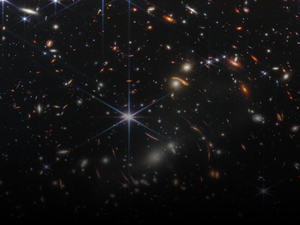
Astronomical events: month of July 2026
July 1
Mercury at aphelion
Mercury reaches its farthest point from the Sun in its orbit.
Messier 22 well placed
One of the brightest globular clusters in the sky becomes well positioned for evening observation in Sagittarius.
IC 4756 cluster well placed
The open cluster IC 4756 in Serpens is favorably positioned for viewing under dark skies.
July 4
Conjunction of Mars and Uranus
Mars and Uranus appear close together in the sky along the same celestial longitude.
Close approach of Mars and Uranus
The two planets reach their closest visible separation, creating an interesting binocular target.
July 6
Earth at aphelion
Earth reaches its farthest point from the Sun in its yearly orbit.
July 7
Neptune enters retrograde motion
Neptune appears to reverse its direction against the background stars as Earth overtakes it in orbit.
Close approach of the Moon and Saturn
The Moon passes near Saturn in the pre-dawn sky.
Moon at Last Quarter
Half of the Moon’s surface appears illuminated as it enters its final quarter phase.
Conjunction of the Moon and Saturn
Saturn passes near the Moon along the same celestial longitude.
July 9
Asteroid 18 Melpomene at opposition
Asteroid 18 Melpomene reaches opposition, making it brightest and visible throughout the night.
Asteroid 8 Flora at opposition
Asteroid 8 Flora reaches opposition and is favorably placed for observation.
July 10
Close approach of the Moon and M45 (Pleiades)
The Moon passes near the Pleiades star cluster in the morning sky.
The Great Peacock Globular Cluster well placed
The globular cluster NGC 6752 becomes well positioned for observation in the constellation Pavo.
July 11
Close approach of the Moon and Mars
The Moon passes near Mars in the early morning sky.
Conjunction of the Moon and Mars
Mars appears near the Moon along the same celestial longitude.
July 12
Lunar occultation of Beta Tauri
The Moon passes directly in front of Beta Tauri, temporarily obscuring the star from view.
Mercury at inferior solar conjunction
Mercury passes between Earth and the Sun, making it difficult to observe.
July 13
The Moon at perigee
The Moon reaches its closest point to Earth and appears slightly larger than average.
July 14
New Moon
The Moon is positioned between Earth and the Sun and is not visible in the night sky.
The Moon at perihelion
The Moon reaches the point in its orbit closest to the Sun.
July 16
Lunar occultation of Regulus
The Moon briefly passes in front of Regulus, the brightest star in Leo.
July 17
Close approach of the Moon and Venus
The thin crescent Moon passes near Venus in the evening sky.
Conjunction of the Moon and Venus
Venus appears near the Moon along the same celestial longitude.
Messier 55 well placed
The globular cluster M55 in Sagittarius becomes favorably positioned for observation.
July 21
Moon at First Quarter
Half of the Moon appears illuminated as it reaches first quarter phase.
July 24
Lunar occultation of Antares
The Moon passes in front of Antares, the bright red heart of Scorpius.
July 25
The Moon at apogee
The Moon reaches its farthest point from Earth and appears slightly smaller in the sky.
July 26
Saturn enters retrograde motion
Saturn appears to reverse direction against the background stars as Earth overtakes it in orbit.
Asteroid 3 Juno at opposition
Asteroid 3 Juno reaches opposition, making it brightest and visible throughout the night.
July 27
134340 Pluto at opposition
Pluto reaches opposition and is visible throughout the night for observers with large telescopes.
Lunar occultation of Sigma Sagittarii
The Moon passes directly in front of Sigma Sagittarii, temporarily blocking the star from view.
July 28
The Moon at aphelion
The Moon reaches its farthest point from the Sun in its orbit.
Asteroid 324 Bamberga at opposition
Asteroid 324 Bamberga reaches opposition and becomes favorably placed for observation.
July 29
Piscis Austrinid meteor shower peak
The Piscis Austrinids meteor shower reaches peak activity, producing a modest number of meteors.
Jupiter at solar conjunction
Jupiter passes behind the Sun from Earth's perspective and becomes unobservable.
Full Moon (Buck Moon)
July’s Full Moon reaches peak illumination and is traditionally known as the Buck Moon.
July 30
Southern Delta Aquariid meteor shower peak
The Southern Delta Aquariids reach peak activity, producing numerous meteors under dark skies.
Alpha Capricornid meteor shower peak
The Alpha Capricornids peak, known for producing slow-moving bright fireballs.
Jupiter at apogee
Jupiter reaches its farthest point from Earth in its current orbit.
—Compiled by Mykel Del Angel