
From earth to orbit: my journey from LiftOff 2026 to the classroom
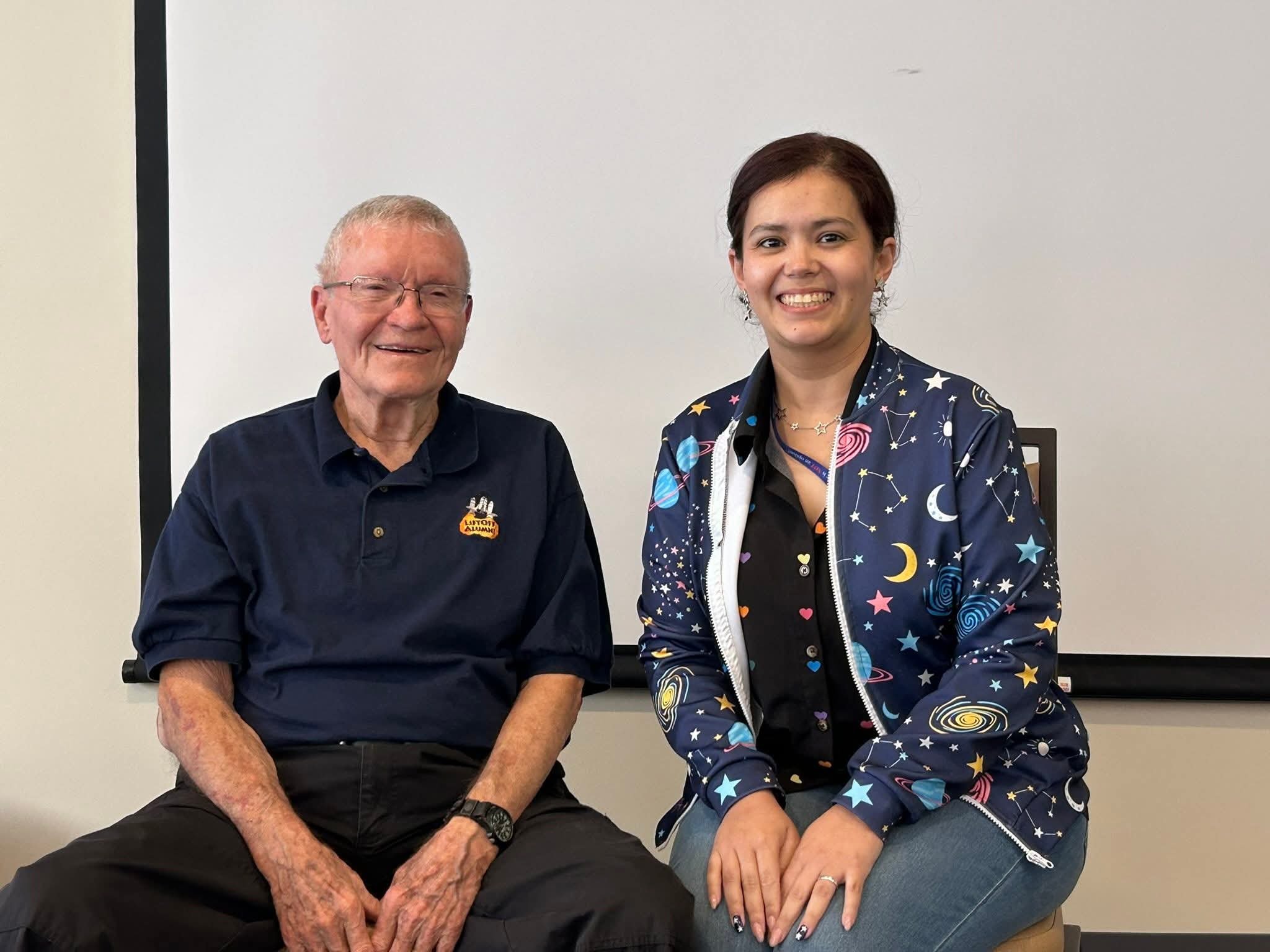
Image courtesy: Stephanie Mendoza
This summer I had the privilege of attending LiftOff 2026: Moon to Mars, an experience that re-ignited my passion for science education, leaving me eager to re-enter the classroom for the 2026-2027 school year.
The energy at the workshop was nothing short of electric. Walking into a room filled with like-minded educators who share a deep curiosity for space exploration created an immediate bond. Everyone got along seamlessly, and it was beautiful to see how our unique personalities shined through during collaborations and lesson-building sessions.
One of the biggest takeaways as a group was inspiration has no age limit. While many of the presentations and workshops were geared toward younger minds, we quickly realized how easily these concepts could be adapted and scaled up to challenge and engage young adults as well.
We had the chance to hear directly from subject matter experts who actively help advance the future of space travel. Simon Gilroy, a professor of botany at the University of Wisconsin-Madison with a doctorate in plant biology, gave a presentation (my favorite of the event) where he dove into the fascinating, gritty, realities of space biology and Martian agriculture.
Did you know, the biggest obstacle to growing food on Mars isn't just the lack of water; it’s the dirt itself! Mars' regolith, or unconsolidated soil, is fundamentally different from Earth's soil because it is heavily laced with perchlorates, toxic salts which could instantly kill plant life. For humans to successfully terraform Mars and grow crops in its soil, the chemical makeup of the ground would need to be altered or rely entirely on closed-system hydroponics, a soilless method of cultivating plants where the water is nutrient rich and recycled, therefore not needing soil.
Gilroy’s presentation made me realize how many years away we are from putting humans on Mars sustainably. Testing these agricultural systems is a necessary, critical stepping stone to conduct before we can expect survival on Mars.
Fred Haise, an Apollo 13 astronaut, gave an unforgettable highlight to remember. The room fell into a silent, attentive awe when Haise stood up to speak. In addition to being considered a living legend, he is an incredibly humble soul.
His profound resilience resonated deeply within my being. Despite heartbreak and immense disappointment from having his mission to the lunar surface aborted, Haise never once thought about giving up on space exploration. Instead, he channeled his experience into training the next generation of astronauts while developing vital advancements to ensure the safety and success of the space race. His story is a powerful reminder that "failure" is often just the catalyst for future innovation.
To channel Haise's spirit of resilience and Gilroy's focus on extreme environments, I am incredibly excited to implement an amazing high-altitude ballooning lesson I adapted from a fellow educator at the training. While the original curriculum spans multiple grade levels, I plan to scale it up for high school students. The goal is to engage them in authentic, hands-on scientific and engineering practices. In my classes, they’ll dive into advanced data analytics by using technology to collect and analyze light data during flight. Then, they will be tasked with identifying significant trends or anomalies near the balloon's burst altitude. By using the Claim, Evidence, Reasoning framework to explain findings, students will act as true subject matter experts, applying scientific method and engineering design to real-world, extreme environmental data.
If you are an educator reading this, I highly encourage you to apply for future LiftOff workshops. It has provided me with a fresh outlook from other STEM teachers, and the experience taught me resources can be repurposed from all age and grade levels to enrich your curriculum. LiftOff 2026 didn't just give me lesson plans; it gave me renewed excitement to teach science, and I cannot wait to see my students reach for the stars this fall.
