
From Twilight Duos to the Great Summer Triangle
Summer brings shorter nights to the Rio Grande Valley, but it also delivers some of the most spectacular, no-equipment-required skywatching opportunities of the year. If you want to enjoy the heavens this month, you don't need an expensive telescope or perfectly dark skies, you just need to know where to look.
The Twilight Duo: Venus and Jupiter Align
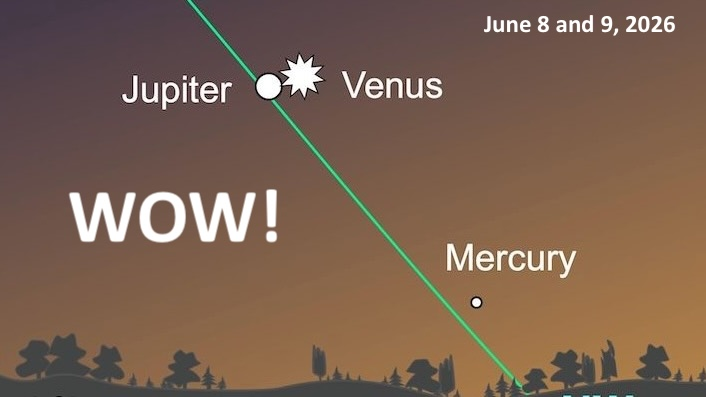
IMAGE COURTESY NASA
Your skywatching journey begins just after sunset during the first week of June. If you step outside roughly 30 minutes after the sun goes down, you will be treated to a stunning planetary highlight low on the western horizon. The two brightest planets from Earth’s view, Venus and Jupiter, are drawing closer to one another every night. This cosmic dance will soon culminate in a breathtaking conjunction where they will appear a mere finger's width apart.
Because of the Rio Grande Valley's unique low latitude, local stargazers have a distinct geographic advantage. Compared to skywatchers in the northern United States, we get a beautifully clear view of these planetary powerhouses before they dip below the horizon. To catch them, simply find a spot with an unobstructed view of the western sky, free of tall buildings or trees. Go out too early and the sky will be too bright; wait too long and they will have already set.
High Overhead: Navigating the Summer Triangle
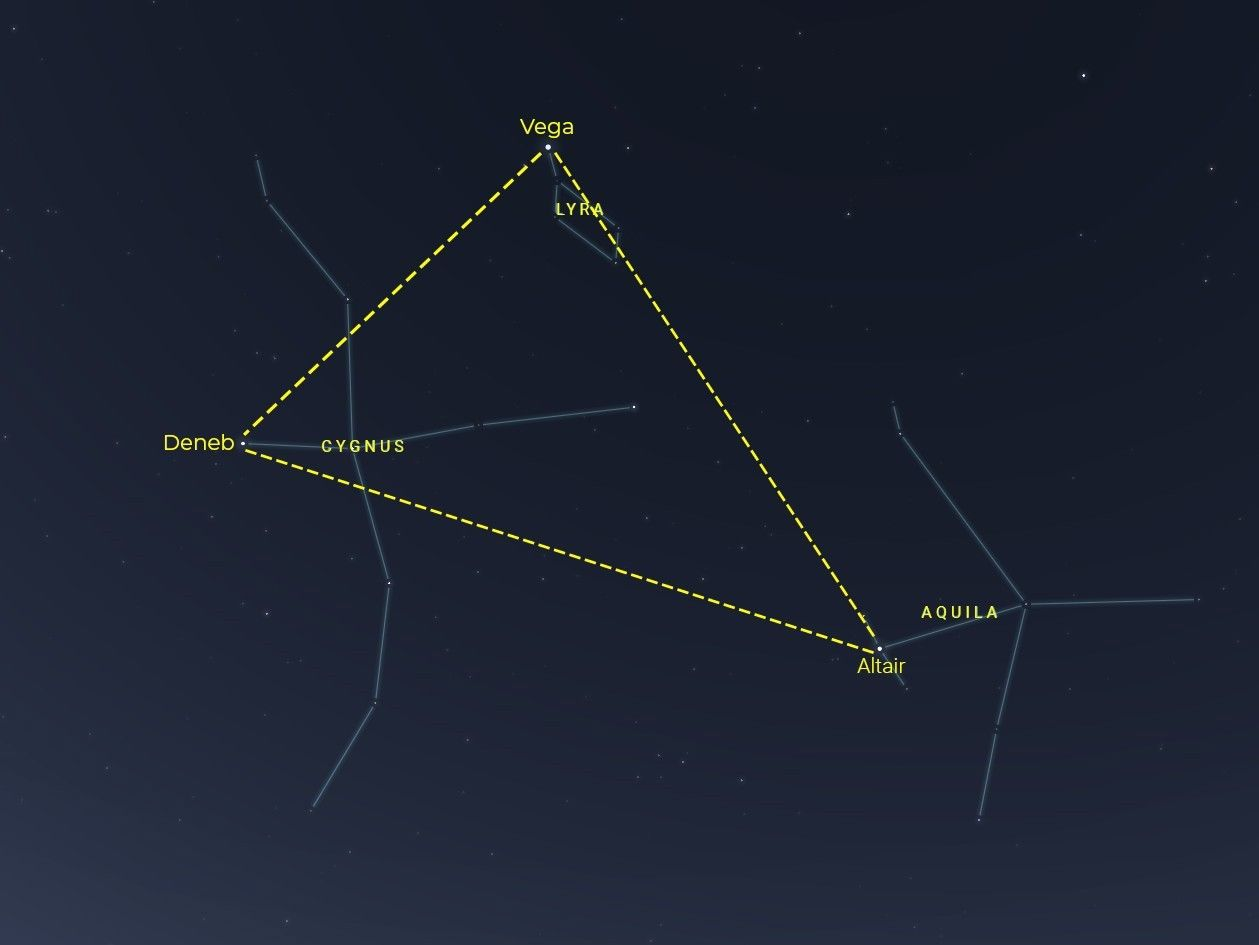
IMAGE COURTESY NASA
Once twilight fades, turn your attention away from the horizon and look straight up. Rising high in the heavens is the Summer Triangle, a massive, recognizable pattern of three bright stars that serves as the perfect roadmap for navigating the summer sky.
While it looks like a giant constellation, it is actually called an asterism, a prominent star pattern spanning three distinct constellations:
Vega (in Lyra the Lyre): The fifth-brightest star in the night sky and your primary anchor. In myth, it represents the magical golden lyre of Orpheus.
Deneb (in Cygnus the Swan): A massive blue supergiant representing the tail of a tragic figure turned into a swan.
Altair (in Aquila the Eagle): A uniquely fast-spinning star located a mere 17 light-years away.
