NASA’s Psyche probe gets gravity boost from Mars on journey to asteroid
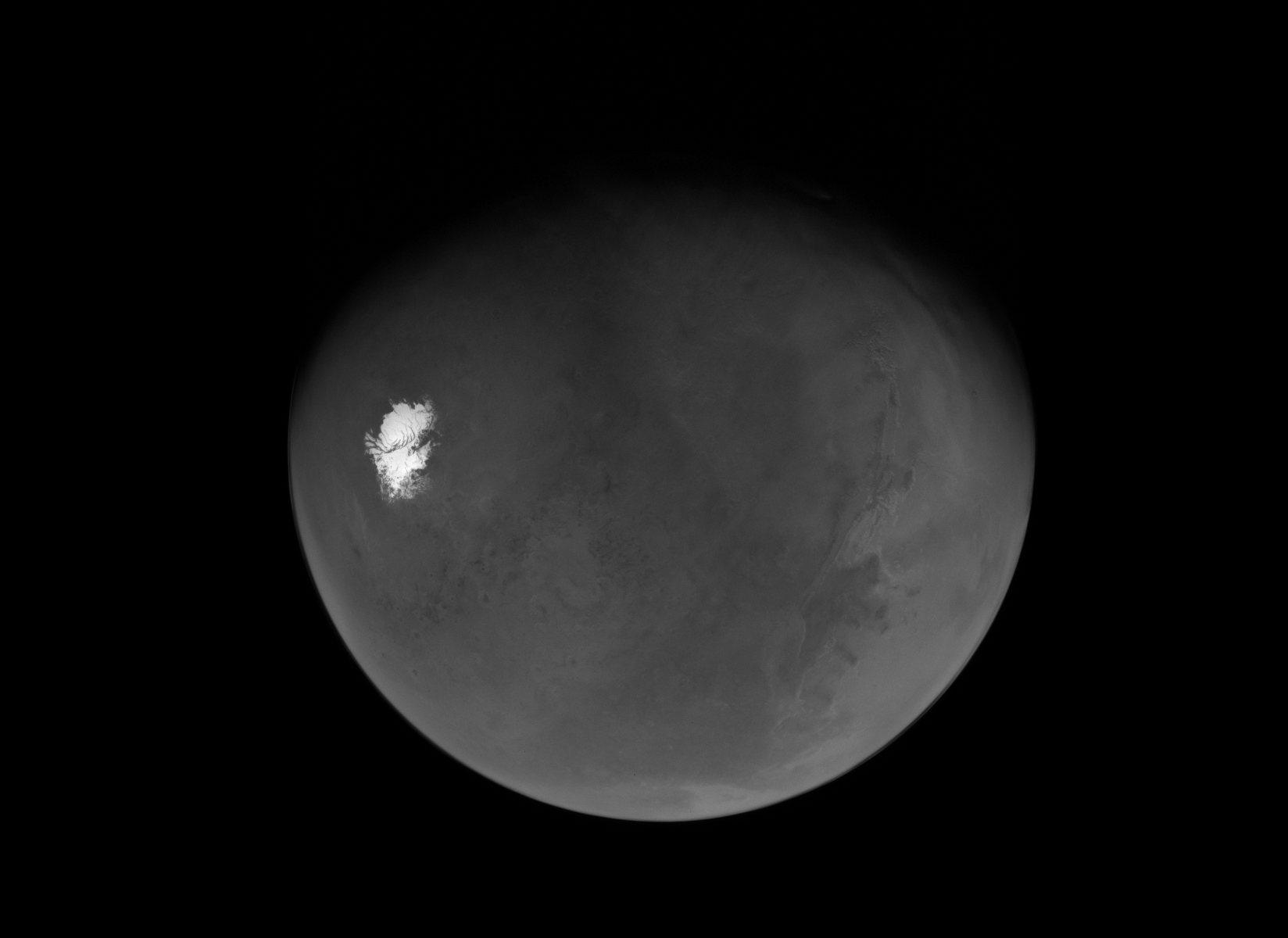
IMAGE COURTESY NASA/JPL-CALTECH/ASU
On May 15, 2026, NASA’s Psyche spacecraft zipped past Mars, coming within 2,864 miles (4,609 kilometers) of the planet’s surface to receive a gravity-assisted speed boost on its journey to one of the most interesting objects in our solar system: the metal-rich asteroid 16 Psyche, located between Mars and Jupiter in the main asteroid belt.
The spacecraft, named after the asteroid, launched in October 2023 on a 2.2-billion-mile (3.6 billion kilometers) mission to study Psyche. The mission aims to help scientists better understand the formation of planetary iron cores and, for the first time, closely examine a celestial body composed largely of metal rather than rock or ice like most other asteroids and comets.
Astronomers believe Psyche may be the exposed core of a planetesimal, one of the small building blocks that formed planets in the early solar system. By determining the asteroid’s composition and age, researchers hope to learn more about Earth and how planets formed billions of years ago.
According to NASA’s Jet Propulsion Laboratory, the purpose of the Mars flyby was to use the planet’s gravity to slingshot the spacecraft and adjust its orbital plane instead of relying on onboard propellant, allowing it to conserve fuel for the mission’s planned science orbits around Psyche.
Gravitational assists are not new and have been used on missions such as Voyager in the 1970s and New Horizons, which visited Pluto in 2015. The technique works by using a planet’s gravity and angular momentum to pull in and sling a spacecraft forward, much like a skateboarder briefly grabbing onto a passing car before letting go.
The flyby “gave the spacecraft a 1,000-mile-per-hour boost,” said Don Han, Psyche’s navigation lead at NASA’s Jet Propulsion Laboratory at the California Institute of Technology. “We are now on course for arrival at the asteroid Psyche in summer 2029.”
One benefit of such flybys is that researchers can gather additional information about the worlds they pass. The mission team used the Mars encounter as an opportunity to test and calibrate the spacecraft’s sensors and cameras before its arrival at Psyche. The flyby also allowed the team to capture images of the Martian surface and atmosphere to assess the performance of the spacecraft’s imaging and data-processing systems.
“We’ve captured thousands of images of the approach to Mars and of the planet’s surface and atmosphere at close approach,” said Jim Bell, the Psyche imager instrument lead at Arizona State University. Some of the images were more detailed and informative than the team expected.
Now that the Mars flyby has been successfully completed, the spacecraft will resume using its solar-electric propulsion system to continue its journey toward Psyche. The probe is expected to arrive in August 2029 and will begin orbiting the asteroid in four mission phases: characterization, topography, gravity science and elemental mapping, for a total of 1,436 orbits.