
How do we measure the universe?
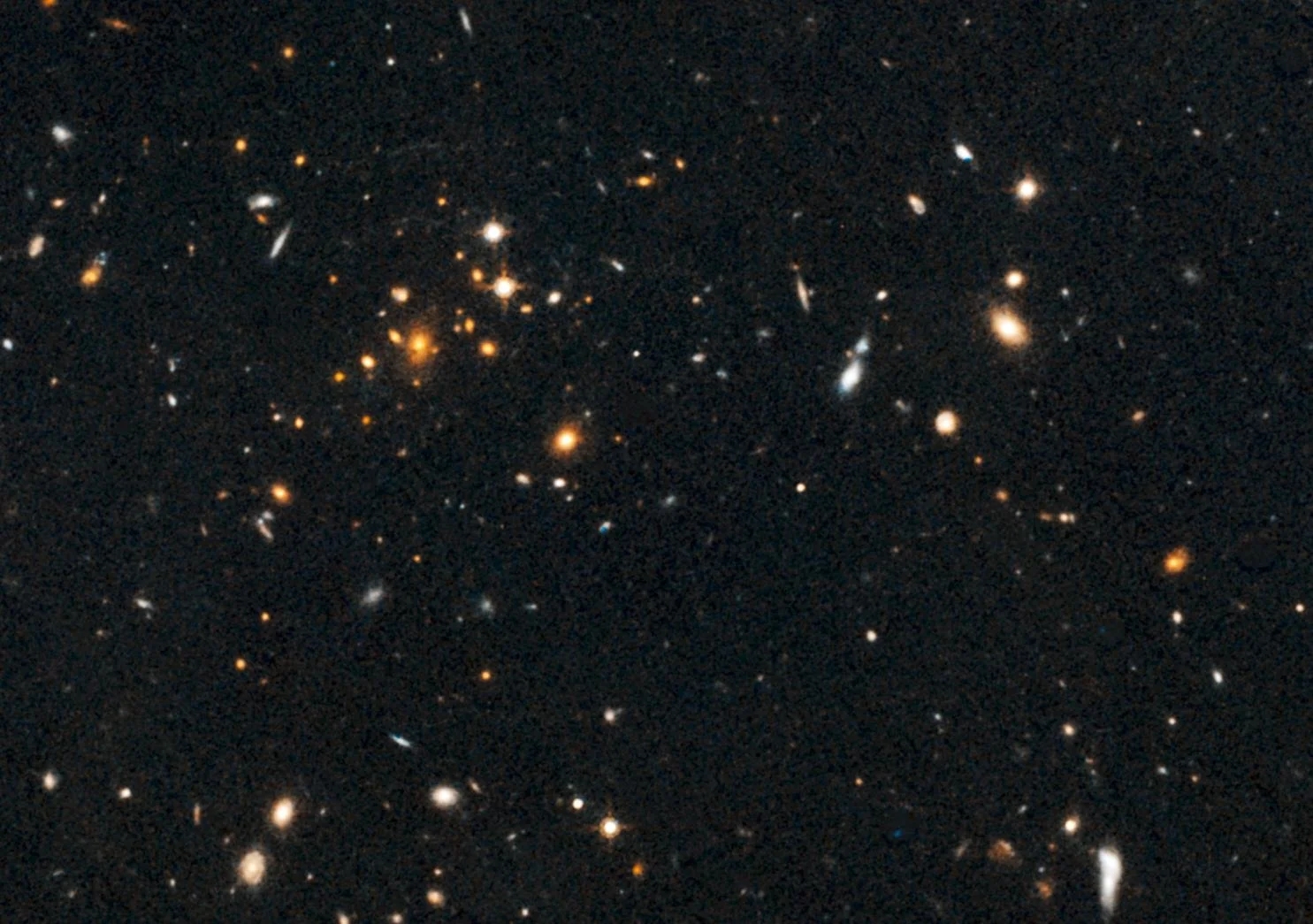
IMAGE COURTESY NASA
The universe is immense, and it can be hard to visualize its vastness, so astronomers use two common scales to measure distances in space: astronomical units (AU) and light-based distance measurements.
An AU is the average distance between the Earth and the Sun, equivalent to approximately 93 million miles. We emphasize “average” because planetary orbits are elliptical, meaning Earth can sometimes be slightly closer or farther from the Sun. The distances from Mercury and Venus to the Sun are fractions of an AU, while distances from Mars to Neptune, including Pluto, are measured in multiple AUs. An AU gives us a clear measurement of distance within our solar system, but it becomes impractical for measuring distances outside of it.
The second scale refers to measuring distance by how far light travels over a certain period of time. Light travels at approximately 186,282 miles per second, so astronomers measure distance based on how long it would take light to reach a destination. Sunlight takes about 8.3 minutes to reach Earth and a little more than four hours to reach Neptune. Proxima Centauri, our closest neighboring star, is about 4.2 light-years away and the Andromeda Galaxy, our closest major galaxy, is approximately 2.5 million light-years away.
The universe is as immense as it is beautiful, and we are all traveling on a small rock for a brief period of time, trying to understand it.
For more information about cosmic measurements you can visit https://science.nasa.gov/solar-system/cosmic-distances/ to learn more.
